LuxSci

Webinar: How to Harness HIPAA-Compliant Marketing & Workflows

LuxSci Secure Marketing

In today’s connected world with millions of messages bombarding people every second of the day, personalized engagement over digital channels is a requirement for any business – especially in healthcare. However, ensuring that your marketing efforts comply with the Health Insurance Portability and Accountability Act (HIPAA) can be a daunting task that never quite gives you the peace of mind you need. The good news is that you don’t have to lose sleep at night worrying about whether your marketing campaigns are secure and protected from data breaches and outside threats. With the right strategies and solutions, you can create HIPAA-compliant marketing campaigns that not only keep data protected, but also boost lead conversions, improve outcomes, and reduce costs.

Here are some simple but necessary steps to get you off and running with HIPAA-compliant marketing campaigns today:

  1. Understand HIPAA Requirements

Before embarking on any marketing campaign, it’s crucial to have a thorough understanding of HIPAA regulations. HIPAA sets strict guidelines for keeping protected health information (PHI) safe. Ensure your marketing team is well-versed in these regulations to avoid any compliance failures. If you’re not sure, check out this recent LuxSci blog post on understanding encryption requirements for HIPAA-compliant email.

  1. Leverage Automated Data Encryption

Safeguarding protected health information (PHI) is a requirement with HIPAA. Use advanced encryption methods – including dedicated cloud infrastructures and automation that encrypts every email sent with no user intervention required – to secure patient and customer data both in transit and at rest. This ensures that any data shared during marketing campaigns remains confidential and secure from breaches.

  1. Implement Consent Management

Obtaining explicit consent from patients and customers before using their information in marketing campaigns is a also requirement and non-negotiable. Make sure you have a consent management system that records, stores, and manages patient and customer consent effectively and efficiently.

  1. Personalize and Hypersegment Campaigns Using PHI Data

HIPAA does not need to hold you back. In fact, using PHI data can take your email targeting and messages to the next level. Personalized marketing can significantly improve patient and customer engagement and increase your lead conversions. Use PHI data to tailor your marketing messages to the specific needs and preferences of precise segments to ensure content is relevant and valuable – and actionable.

  1. Utilize Encryption for All Healthcare Communications

Communicating with patients and healthcare customers through secure channels is essential for ALL communications, not just those that require HIPAA compliance. Use flexible encrypted email services, secure messaging apps, and patient portals to share sensitive information, and protect yourself from the latest cybersecurity threats at all times.

  1. Monitor, Analyze and Improve Marketing Campaigns

Regularly test, monitor and analyze your marketing campaigns to ensure ongoing HIPAA compliance and the best results, using data on emails delivered, opened, clicked and secured. Take action in real-time to improve segmentation and results based on your latest business needs and deliverability requirements.

Benefits of HIPAA-Compliant Marketing

Implementing HIPAA-compliant marketing strategies offers numerous benefits, including:

  • Improved healthcare experiences – Personalized and secure communications build trust and strengthen relationships with patients and customers.
  • More lead conversions – Hypersegmentation and automation drive higher conversion rates and improve patient and customer engagement.
  • Increased sales opportunities and revenue – Targeted, timely communications and campaigns drive the best results for growing your business.

Call to Action: ‘How-To’ Webinar on HIPAA-Compliant Marketing

Embracing HIPAA-compliant marketing is not just about avoiding penalties; it’s about delivering superior patient and customer experiences – and achieving business success. With HIPAA-compliant marketing, you can create powerful campaigns that protect PHI data, drive lead conversions, and improve patient and customer outcomes.

Are you ready to transform your healthcare marketing strategy – in a HIPAA-compliant way?

Join us for a webinar on How to Harness HIPAA-Compliant Marketing and Workflows, taking place on Tuesday, August 6 at 12:00PM Eastern Time. We’re joining forces with the experts over at Compliancy Group for an informative ‘how-to’ session on the latest best practices, success stories and easy-to-use tools for ensuring compliance across your organization – with a focus on marketing, workflows and automation. This includes:

  • Effectively and efficiently managing compliance across multiple standards
  • How to increase engagement and drive sales with HIPAA-compliant marketing
  • Optimizing workflows with secure forms and automation
  • Includes 2 live demos

Don’t miss it. Sign up today!

Register

Get in touch

Find The Best Solution For Your Organization

Talk To An Expert & Get A Quote

A member of our staff will reach out to you

Get Your Free E-Book!

Discover E-Book & gain expert insights.

What you’ll learn:

Enter your email to download now!

We respect your privacy. No spam, ever.

Related Posts

What is a cyber risk assessment?

What Is a Cyber Risk Assessment?

As cyber threats become both more frequent and sophisticated, it’s essential for healthcare companies to strengthen their cybersecurity posture and safeguard the electronic protected health information (ePHI) within their IT ecosystems and communications. This begins with a comprehensive cyber risk assessment that spans infrastructure, applications and communications. 

A cyber risk assessment enables healthcare companies to focus their attention on the IT areas that need the most improvement, allowing them to be more effective in their threat mitigation efforts. This not only reduces the chances of cyber attacks but helps them align with HIPAA’s guidelines and maintain the operational integrity required to best serve their patients and customers.

Let’s discuss why it’s vital that healthcare companies conduct thorough cyber threat risk assessments and the steps your organization can take to carry one out effectively.

Why Are Cyber Risk Assessments Crucial for Healthcare Organizations?

In an increasingly digitized healthcare landscape, conducting regular risk assessments is essential for companies of all sizes, in every industry. For healthcare companies, charged with protecting patient data, it’s especially critical and often a compliance requirement. Electronic PHI, which contains details of an individual’s health history, including current conditions, past illnesses and procedures, prescribed medicine, etc., is very sensitive in nature, so healthcare companies must go the extra mile to ensure its protection in transit and at rest. 

Performing a cyber threat risk assessment is the first step to achieving this critical requirement. A risk assessment allows you to identify all of the ePHI within your business, understand the threats it faces, determine gaps in your cybersecurity posture, and, most importantly, mitigate them.  

Additionally, from a compliance perspective, conducting regular risk assessments is a key requirement of HIPAA’s Security Rule. Consequently, healthcare companies must carry out periodic risk assessments if they want to comply with HIPAA regulations, and avoid the consequences of non-compliance. A risk assessment provides documented evidence, to auditors, supply-chain partners, and others, that you are conscious of security concerns and have taken the proper steps to mitigate them. 

How Do You Conduct A Cyber Risk Assessment? 

Now that we’ve discussed their importance, let’s turn our attention to how healthcare organizations can conduct effective cyber risk assessments. 

Identify Assets

The first, and, arguably, most important step of a risk assessment is identifying your organization’s digital assets, which include: 

  • Hardware: endpoint devices (desktops, laptops, smartphones, etc.), servers, network equipment, medical equipment, etc. 
  • Systems, infrastructure and applications: operating systems, cloud services, etc. 
  • Data, i.e., ePHI

Now, the reason asset identification could be considered the most crucial part of a risk assessment is that a healthcare organization‘s security teams can’t protect what they aren’t aware of! 

Consequently, weeding out instances of “shadow IT”, i.e., the use of applications and/or systems without the approval of a company’s IT department is essential. Otherwise, you could have cases in which ePHI is used in applications, resides on databases, and so on – without it being adequately safeguarded. 

Once you’ve identified your assets, you need to classify them: based on their sensitivity and potential impact if a security incident were to occur.

Identify Vulnerabilities and Threats

Having successfully catalogued your assets, you must now establish the factors most likely to compromise their security. This first means pinpointing the vulnerabilities in your IT ecosystem, which could include:

  • A lack of encryption, or weak standards
  • Lax access controls
  • Weak password policies 
  • Lack of monitoring and logging 
  • Outdated software (with some no longer being supported by its vendor) 
  • End-of-life hardware
  • Infrequent back-ups
  • Unverified or insecure third-party vendors

When you have a better understanding of these vulnerabilities, which are called attack vectors, you can then determine the most likely threats to ePHI based on the gaps in your security posture. These include:

  • Data breaches or exposure
  • Malware, e.g., ransomware, viruses, spyware, etc. 
  • Social engineering phishing
  • Insider threats (whether through malice or human error)
  • Distributed Denial of Service (DDoS) attacks

Fortunately, there is an array of scanning tools that will help you find your cybersecurity vulnerabilities. As far as understanding the main threats to your sensitive patient and customer data, you need to keep up with the latest in threat intelligence. Cybercriminals are always devising new ways to infiltrate healthcare organizations’ networks, so your security teams must remain aware of emerging cyber threats. 

Risk Prioritization

So, now you have catalogued your assets, determined their vulnerabilities, and identified the threats. However, implementing cyber threat mitigation measures requires resources – namely time and money – so you must prioritize which risks to mitigate first, based on their likelihood and impact.

First, how likely is a threat to exploit a vulnerability? Healthcare organizations typically determine this through existing threat databases, such as MITRE, as well as keeping up-to-date on the latest threat intelligence and determining how it pertains to your company. 

Secondly, evaluate the potential impact, or consequences, of a threat actually manifesting, i.e., a an email breach or a malicious actor successfully pulling off a cyber attack and infiltrating your network. When analyzing the potential impact, consider the financial, operational, reputational, and compliance implications. 

Report Findings

At this point, you should report the findings of the risk assessments to your company’s key stakeholders, e.g., upper management, compliance officers, IT management and security, etc. This ensures that decision-makers understand the nature of the top threats facing your organization, their potential business impact, and the urgency of implementing mitigation controls. 

This also helps security teams secure the resources they need to bolster their cybersecurity posture accordingly. An additional benefit of this reporting is that it provides an audit trail for compliance efforts, as it demonstrates your efforts to better protect patient and customer data. 

Implement Mitigation Measures

Now, we’ve come to the point in the risk assessment process where you act on your due diligence and implement the policies and controls that will better protect patient data and comply with HIPAA guidelines.  

Mitigation measures broadly fall into three categories: 

  • Preventive: e.g., encryption, access control, user authentication (e.g., multi-factor authentication (MFA))
  • Detective: e.g., vulnerability scanning, continuous monitoring
  • Corrective: e.g., incident response, backups and disaster recovery

A robust cybersecurity posture requires a combination of all three. Your risk assessment may reveal that your organization is strong in one aspect but less so in others, or you may need to bolster your efforts across the board. 

Document Your Risk Mitigation Measures

Create a risk mitigation implementation report that details how your organization executed its cyber threat mitigation strategies. This should include: 

  • Affected assets: the parts of your IT infrastructure (servers, databases, etc.) and applications you identified as vulnerable and the severity of their corresponding threats. 
  • Mitigation actions: the specific action(s) undertaken to mitigate cyber threats against the asset, e.g., enhancing encryption standards, strengthening password policies, conducting cyber threat awareness training, etc. 
  • Technical details: where applicable, such as a particular update applied to an application, how a system has been configured, which new software solution has been deployed, and so on.
  • Post-mitigation risk assessment: re-evaluate the risk level of each asset after the implementation of new security measures. 
  • Monitoring and compliance: detail how the organization will monitor the efficacy of the implemented measures, as well as how your enhanced controls and policies align with compliance standards (e.g., HIPAA, NIST, HITRUST, etc).

As with the report for stakeholders after the initial stages of the assessment, the risk mitigation implementation report also leaves a compliance audit trail, which will become all the more important when the proposed changes to the HIPAA Security Rule come into effect.

Continuous Monitoring and Review

As detailed in your risk mitigation implementation report, you must continuously monitor your IT infrastructure to assess the effectiveness of your newly implemented policies and controls. This process also mitigates cyber risk, in and of itself, as it provides fewer opportunities for malicious actors to breach your network: you’ll have systems in place to alert you of suspicious activity. 

Additionally, you must regularly reassess your organization’s cyber risks as new threats emerge, your IT ecosystem evolves, or if you succumb to a cyber attack. 

How Often Should You Conduct Cyber Risk Assessments? 

Healthcare organizations should carry out a cyber risk assessment at least once a year, with respect to time, or when they make changes to their IT infrastructure. With the proposed changes to the HIPAA Security Rule on the horizon, now is an opportune time to conduct a risk assessment and measure your cyber threat readiness against the new stipulations of the soon-to-be-updated Security Rule.

Also, as alluded to above, if you suffer a security incident, you must conduct a post-breach assessment, once the threat is contained, to establish how a malicious actor breached your network – and how to prevent it from happening again. 

How LuxSci Helps Mitigate Cyber Risk in the Healthcare Industry

With more than 20 years of experience, LuxSci has developed the required expertise to make secure communication solutions tailored to meet the stringent cyber risk mitigation needs of the healthcare industry.

LuxSci’s suite of HIPAA-compliant communication solutions includes:

  • Secure Email: HIPAA-compliant email solutions for executing highly scalable, high volume email campaigns that include PHI – millions of emails per month.
  • Secure Forms: Securely and efficiently collect and store ePHI without compromising security or compliance – for onboarding new patients and customers and gathering intelligence for personalization.
  • Secure Marketing: proactively reach your patients and customers with HIPAA compliant email marketing campaigns for increased engagement, lead generation and sales.
  • Secure Text Messaging: enable access to ePHI and other sensitive information directly to mobile devices via regular SMS text messages.

Interested in discovering more about how LuxSci can help you protect your patient’s ePHI, mitigate cyber risk, and ensure HIPAA compliance for your email and communications? Contact us today!


HIPAA Compliant Email

What Are the Implications of the Proposed Changes to the HIPAA Security Rule?

With the recent announcement of proposed changes to the HIPAA Security Rule, by the Office for Civil Rights (OCR), healthcare providers, payers, suppliers, and organizations of all sizes will have to tighten up their cybersecurity practices. In some cases, considerably. 

However, with the announcement being so recent (and there not even yet being a clear timeline for when companies will have to implement the changes), it’s all too easy for organizations to view the proposed amendments as a challenge that’s far off in the future.

However, even at this early stage, the proposed changes to the Security Rule require careful consideration and important conversations. Soon, healthcare companies will have to implement or improve a series of cybersecurity controls designed to better safeguard electronic protected health information (ePHI). 

In light of this, in this post, we’ll discuss some of the most important practical considerations that healthcare organizations will have to contend with to maintain HIPAA compliance when the proposed changes to the Security Rule go through. 

What are the Key Proposed Changes to the HIPAA Security Rule?

First, a refresher on what the proposed changes to the Security Rule are:

  1. More Comprehensive Risk Management: healthcare organizations must conduct more frequent risk assessments to identify, categorize, and mitigate threats to sensitive patient data. 
  2. Stricter Documentation and Evidence Retention Policies: similarly, stronger documentation and record-keeping practices to ensure organizations can demonstrate compliance with security requirements.

    This includes:
  • Maintaining detailed records of how they assess threats and implement safeguard security controls (e.g., encryption policies, access controls, etc).
  • Retaining detailed audit logs of system access, data modifications, and security events, as well as reports from security solutions, such as firewalls and intrusion detection systems all must be securely stored, retained for a defined period, and made available for audits and compliance reviews.
  • By the same token, the proposed updates to the Security Rule may extend how long healthcare organizations must retain logs and other security documentation, allowing auditors to review historical compliance efforts in the event of an investigation.
  1. Mandatory Encryption for All ePHI Transmission: healthcare companies will require end-to-end encryption for emails, messages, and data transfers involving ePHI. Like today, this means that patient data must be encrypted in transit, i.e., from one place to another (when collected in a secure form, sent in an email, etc.), and in storage, i.e., where it will reside.
  2. Stronger User Authentication and Identity Verification Requirements: healthcare providers must implement stronger identity access management IAM safeguards, such as Multi-Factor Authentication (MFA), for employees with access to patient data.
  3. Tighter Third-Party Security Controls: stricter security controls for business associates who have access to the healthcare company’s ePHI. One of the proposed changes to the HIPAA Security Rule is that vendor security audits will be mandatory instead of optional.
  4. Updated Incident Response (IR) and Data Breach Reporting Rules: mandating stricter breach notification timelines for healthcare entities and their business associates, with them being obligated to inform parties affected by a security breach as soon as possible. 

What Are The Practical Implications for Healthcare Companies?

So, what will healthcare companies have to do to comply with HIPAA regulations when the proposed changes to the Security Rule go through? Let’s look at the main practical considerations.

Cybersecurity Solution Deployment and Infrastructure Upgrades 

Many healthcare companies will have to install (and subsequently, maintain) new IT infrastructure and deploy new cybersecurity tools to strengthen their authentication safeguards (e.g., MFA, Zero Trust, etc.) to meet new HIPAA’s heightened cybersecurity standards.

Expanded Vendor and Third-Party Management

As well as having to deploy new cybersecurity solutions, such as HIPAA compliant email services and continuous monitoring tools, healthcare organizations will have to be more diligent in their oversight of their third-party vendors.  

Stricter Auditing and Documentation Requirements

In having to provide more details of their risk management practices and maintain real-time logs, healthcare organizations will have to develop processes, policies, and supporting documentation. 

Staff Training 

Healthcare companies will have to train their staff on the updates of the Security Rule, their implications, how to use the new applications and hardware deployed to harden their security posture, etc. 

Increased Management and Administrative Burden 

Dealing with proposed changes to the Security Rule is going to require all hands on deck. 

Managers and stakeholders are going to make several important strategic decisions; procurement and product managers are going to have to research and purchase new solutions; IT will have to deploy the solutions; and everyone will need to learn how to use them. 

With all this in mind, more will be required from everyone within your organization. Employees will be taken away from their work, which could affect the quality of the service provided to patients and customers. 

That’s why it’s crucial to be prepared…

How Can You Prepare For the Proposed Changes to the Security Rule?

  • Conduct risk assessments: pinpoint vulnerabilities within your IT network and the ePHI contained therein. You should conduct risk assessments annually at the very least – or you upgrade your IT infrastructure. In light of the proposed amendments to the Security Rule, conducting a risk assessment to identify the security gaps in your network against the proposed rule changes is essential.
  • Evaluate your existing email and communication platforms: to accommodate the upcoming changes to the Security Rule, many healthcare companies will need to upgrade to HIPAA compliant email communication solutions, as well as encrypted databases for securely storing ePHI at rest. Deploying an email services solution designed for the healthcare industry, like LuxSci, best ensures compliance with encryption and the other new requirements of the Security Rule.
  • Improve your organization’s incident response planning and documentation processes: develop all the required documentation to track the movement of patient data, and refine your processes for handling security events. This also encompasses training your staff on your new security policies and procedures.
  • Improve your organization’s cybersecurity posture: by implementing end-to-end encryption, network segmentation, zero-trust security infrastructure, data loss protection (DLP) protocols, and other measures that will better protect patient data.
  • Perform vendor due diligence: ensure your third-party service providers meet HIPAA compliance standards and that you have a Business Associate Agreement (BAA) in place with each vendor that can access your ePHI. 

How Luxsci Can Help You Navigate the Proposed Changes to the HIPAA Security Rule

With more than 20 years of experience in delivering best-in-class secure healthcare communication solutions, LuxSci is a trusted partner for healthcare organizations looking to secure their email and digital communications in line with regulatory standards and the industry’s highest security standards.

LuxSci’s suite of HIPAA-compliant solutions includes:

  • Secure Email: HIPAA-compliant email solutions executing highly scalable email campaigns that include PHI – send millions of emails per month.
  • Secure Forms: Securely and efficiently collect and store ePHI without compromising security or compliance – for onboarding new patients and customers and gathering intelligence for personalization.
  • Secure Marketing – proactively reach your patients and customers with HIPAA compliant email marketing campaigns for increased engagement, lead generation and sales.
  • Secure Text Messaging – enable access to ePHI and other sensitive information directly to mobile devices via regular SMS text messages. 

Interested in discovering more about LuxSci can help you get a head start on upgrading your cybersecurity stance to ensure future HIPAA compliance? Contact us today!

healthcare marketing

What is a SMART Objective in Healthcare Marketing?

Healthcare marketing objectives typically follow the SMART framework: Specific, Measurable, Achievable, Relevant, and Time-bound goals that guide marketing campaigns and patient outreach programs. These structured objectives help healthcare organizations track progress, measure success, and adapt strategies to meet defined targets within budget and regulatory requirements. Clear, well-defined objectives lead to effective resource allocation and higher returns on marketing investments. As a result, marketing teams use this framework to develop campaigns that deliver quantifiable results while maintaining healthcare industry standards and compliance requirements.

SMART Marketing Requirements

The SMART framework provides healthcare organizations with a structured method to develop marketing plans that deliver measurable results. Marketing teams design objectives that meet specific criteria for success, including detailed action plans and performance metrics. Each objective links to broader organizational goals while maintaining healthcare compliance standards. Teams consider market conditions, resource availability, and patient needs when setting these objectives. The framework ensures marketing plans remain focused on achievable outcomes rather than vague aspirations. To track results, organizations review their healthcare marketing objectives quarterly to validate alignment with business goals and adjust targets based on market changes. Marketing teams document their objectives in detail, including baseline metrics, target improvements, and measurement methods to track progress accurately.

  • SMART objectives help healthcare marketers directly connect marketing activities to measurable patient acquisition outcomes.
  • Cross-departmental collaboration improves when marketing and relevant teams set out clearly defined objectives.
  • Healthcare organizations using structured objectives can better demonstrate marketing value to leadership and stakeholders.
  • Well-documented SMART objectives create marketing accountability while supporting compliance with healthcare regulations.
  • The framework encourages more efficient resource allocation by requiring measurable outcomes for all marketing investments.

Target Markets and Patient Segments

Marketing teams use demographic data and healthcare utilization patterns to identify target patient populations. They analyze factors like age groups, insurance coverage, medical needs, and geographic location to create focused marketing objectives. This research shapes campaign messaging and channel selection for different patient segments. Teams track response rates across various demographics to refine their targeting strategies. Market segmentation helps organizations allocate marketing resources to the most promising patient groups and service lines. Research includes analyzing patient data from electronic health records, insurance claims, and market surveys to understand healthcare needs and preferences. Teams develop patient personas to guide marketing efforts and create relevant messaging for each segment. They study healthcare consumption patterns, referral sources, and patient journey maps to identify marketing opportunities within each segment.

Budget Planning and Resource Management

Healthcare marketing objectives should include detailed budget planning and resource allocation strategies. This means that teams develop cost projections for different marketing channels and campaign types. They track spending against expected patient acquisition costs and revenue generation. These financial objectives help organizations maintain profitable marketing operations while meeting growth targets. Budget planning includes staff time, technology costs, advertising and lead generation expenses, and marketing content production. Regular financial reviews ensure marketing activities stay within planned spending limits while delivering expected results. Marketing departments calculate return on investment for each campaign type and channel to optimize resource allocation. They maintain detailed cost tracking systems to monitor expenses across all marketing activities. Teams develop contingency plans for budget adjustments based on campaign performance and market changes.

Technology Integration and Digital Marketing

Marketing objectives dictate technology requirements for campaign execution and performance tracking. Teams set goals for website optimization, email deliverability and conversions, social media engagement, and digital ad campaign results. They also plan implementation schedules for new marketing technologies and patient communication tools. These objectives include metrics for online appointment scheduling, patient portal usage, email engagement, and digital content engagement. Organizations track technology adoption rates and return on digital marketing investments. Marketing teams continuously evaluate new healthcare marketing technologies and platforms to improve campaign effectiveness. For example, email marketing platforms that securely transmit protected health information (PHI) can enable greater personalization with more targeted and customized messages. Integration plans are developed for marketing automation tools, email marketing and campaign tools, customer relationship management systems, and analytics platforms. The technical requirements include the necessary data security measures, such as end-to-end encryption, to protect patient information and maintain HIPAA compliance across all digital marketing channels.

Marketing departments can also create automation objectives to nurture leads and improve operational efficiency. Email communication campaigns are created with targeted messages based on patient attributes, health conditions, interests and product needs. Marketing teams must establish protocols for using PHI to personalize patient outreach while maintaining compliance standards. Marketing automation tools help track patient interactions across multiple touchpoints and trigger appropriate follow-up communications. Organizations measure email engagement rates, deliverability, and conversion metrics to evaluate effectiveness. Their teams develop workflow automation systems that reduce manual tasks and improve campaign conversions and ongoing engagement. These automated processes help marketing departments manage larger email volumes while maintaining personalized patient and customer communications.

Campaign Execution and Timeline Management

Healthcare marketing teams create detailed implementation schedules for their objectives. They set specific dates for campaign launches, content creation, and performance reviews. Marketing calendars account for seasonal healthcare needs, annual testing, procedures and plan enrollments, and organizational updates. Teams coordinate marketing activities with other departments, including clinical departments, customer experience teams, operations, IT infrastructure and security, and administrative staff. Project management tools help track progress toward marketing objectives and maintain accountability. Regular timeline reviews allow teams to adjust schedules based on results and changing priorities. Campaign execution plans should also include content development schedules, media placement timelines, and coordination with external marketing vendors. The teams create workflow systems to manage multiple campaigns across different channels and patient segments, and an approval processes is established for marketing campaigns and materials to ensure compliance with healthcare regulations and brand standards.

Performance Analysis and Strategy Refinement

Successful healthcare marketing teams establish systems to measure marketing objective achievements, with their teams tracking key performance indicators through analytics platforms and robust reporting tools. They analyze patient acquisition data, lead generation and conversions, opportunities and revenue growth. This information helps marketing departments identify successful strategies and areas for improvement. Performance analysis includes comparing results against industry benchmarks and competitor performance, as well as their own historical performance. Regular strategy reviews ensure marketing objectives remain aligned with organizational goals and market conditions. Marketing teams should create monthly performance reports, tracking progress toward SMART objectives. The teams should also conduct quarterly reviews of marketing strategies to assess effectiveness and make necessary adjustments. Analysis includes patient satisfaction and engagement metrics, service and product line revenue growth rates, and marketing campaign response rates. Teams use this data to refine future marketing objectives and improve campaign performance.

LuxSci Third Party Integrations

The Risks of Third-Party Email Integrations for Healthcare Companies

Today’s healthcare organizations heavily rely on a variety of third-party organizations for a range of services and products. This includes applications (i.e., SaaS solutions), suppliers, partners, and other companies depended upon to serve their patients and customers. 

As the healthcare industry evolves, companies will need to increasingly collaborate with external parties, or business associates, which creates several dependencies and risks. 

In particular, third-party email platforms are integral to the operations of healthcare companies, and the sensitive nature of protected health information (PHI) contained in email communications raises the stakes exponentially. 

This post analyzes the main risks associated with third-party email integrations. From there, we detail the most effective measures for safeguarding your company from the dangers of an insecure integration with an email delivery platform.

What Are The Risks of Third-Party Email Integrations?

Email applications are a pillar of the modern workplace, enabling companies to communicate almost instantly and facilitating greater productivity and efficiency. Email has transformed the speed at which transactions can take place and individuals receive the product or service they’ve purchased. 

Consequently, the importance of email communication and the vast amounts of sensitive data it encompasses, makes it a contrast target – or “attack vector” for cybercriminals. Hackers and other malicious actors know that if they can infiltrate an organization’s email system, they have the potential to steal vast amounts of private or proprietary data. Just as alarmingly, they may simply use an insecure email platform as a backdoor into a company’s wider network, assuming greater control over their systems in an effort to maximize their financial gain or inflict maximum damage to an organization.

For healthcare companies with ambitious patient engagement goals, sharing protected health information (PHI) with a reliable third-party email provider is mandatory. Unfortunately, this comes with a litany of risks, which include:

  1. Data Breaches: weak security features in third-party email providers can expose PHI. 
  2. Misconfigured Permissions: misconfigurations and a lack of oversight control can result in personnel at third parties having excessive access to PHI.
  3. HIPAA Non-Compliance – if the integration does not support encryption, audit logs and other features mandated by HIPAA, you may drift into non-compliant territory.
  4. Financial Implications: violating HIPAA regulations can result in financial penalties, including fines and compensation to affected parties. 
  5. Reputational Damage: companies that fall victim to cyber attacks, especially through negligence, become cautionary tales and case studies for cybersecurity solution vendors. Data exposure that comes from an insecure email platform integration can have disastrous effects on your company’s reputation. 

Therefore, mitigating the risks of integrating a third-party email platform into your IT infrastructure, platforms and systems is crucial. This includes customer data platforms (CDP), electronic health record systems (EHR) and revenue cycle management platforms (RCM). Let’s move on to specific strategies on how to do so and, subsequently, better safeguard your organization’s PHI. 

How To Mitigate Email Integration Risk

Now that you have a better understanding of the potential risks that come with integrating an insecure third-party email solution into your IT ecosystem, let’s look at risk prevention. Fortunately, several strategies will significantly lower the risk of malicious actors getting their hands on the sensitive patient data under your care. Let’s take a look:

Verify A Third-Party Vendor’s Security Practices

Before sharing PHI with a vendor, ensure they have a strong cybersecurity posture. This makes sure they have measures such as encryption, access control (or identity access management (IAM), and continuous monitoring solutions in place, in addition to conducting regular risk assessments. 

Similarly, it’s crucial to research an email provider’s reputation, including how long they’ve been in operation, the companies they count among their clients, and their overall standing within the industry. 

Business Associate Agreements (BAAs)

A business associate agreement (BAA) is a legal document that’s required for HIPAA compliance, when sharing PHI with third-party vendors, such as email services. It ensures that both you and the vendor formally agree to comply with HIPAA regulations and your respective responsibilities in protecting patient data. 

Without a BAA, the above point about verifying a vendor’s security practices is moot. If they’re not willing to sign a BAA, their security stance is irrelevant, as your organization would have violated HIPAA regulations by not signing a BAA. More to the point, a HIPAA compliant email vendor will be eager to highlight their willingness to sign a BAA, as it advertises their ability to safeguard PHI and aid companies in achieving compliance. 

Encrypting PHI

Encryption needs to be a major consideration when it comes to integrating a third-party email services provider. Adequate encryption measures ensure that sensitive data is protected even in the event of its exfiltration or interception. Sure, the hackers now have hold of the PHI, but with proper encryption policies and controls, it will be unreadable, preserving the privacy of the individuals affected by the data leak. 

With this in mind, encryption measures that mitigate third-party email integrations include automated encryption, which ensures PHI is always encrypted without the need for manual configuration, and flexible encryption, which matches the encryption level with the security standards of your recipients. 

Threat Intelligence

Unfortunately, cybersecurity never stands still. With the ever-evolving nature of cyber threats, healthcare organizations must keep up with the latest dangers to patient data. This means creating a process for discovering, and acting upon, the latest threat intelligence.

This could entail signing up for a threat intelligence service, or retaining the periodic services of an external threat intelligence expert. 

Developing An Incident Response Plan For Vendor-Related Breaches

The alarming reality of securing PHI is that, even with robust safeguards in place, such as continuous monitoring, a process for acquiring the latest threat intelligence, and generally following the advice outlined in this post, data breaches are still a stark reality. Cyber criminals will always target healthcare organizations, due to the value and sensitivity of their data and systems. Worse, even as security measures grow more effective, the tools that malicious actors have at their disposal become more sophisticated. It’s an arms race, and one that’s only been exacerbated by the introduction of AI, with both security professionals and cyber criminals honing their use of it for their respective purposes.

Taking all this into consideration, having a comprehensive incident response plan in place ensures your organization responds quickly and effectively to cyber threats, or even suspicious activity. Your incident response plan should:

  • Detail what employees should do if they suspect malicious activity.
  • Outline steps for investigation and containment.
  • When and how to notify affected parties.
  • Processes for disaster recovery and retaining operational continuity.

While it’s vital to develop a general incident response plan, having a specific set of protocols for security breaches caused by third-party vendors is especially prudent.

Choose a HIPAA-Compliant Email Provider

An efficient and convenient way of mitigating the risks of third-party email integrations is to deploy a HIPAA compliant email delivery platform for communicating with patients and customers. 

Being well-versed with the safety requirements of healthcare organizations, HIPAA compliant email software features all the security required to safeguard PHI. In deploying a HIPAA compliant email provider, you also implement several of the strategies outlined above, such as encryption and signing a BAA (as a HIPAA compliant will offer a BAA). Accounting for this, taking the time to select the right HIPAA compliant email provider for your organization’s needs and goals should be a key part of your overall cyber threat defense strategy. 

Train Staff on Secure Email Communication Practices

Your staff is a considerable part of securing third-party email communications, so they must know the best practices for email security and safeguarding PHI. Comprehensive cyber threat awareness training ensures your personnel understand the risks of HIPAA non-compliance and follow the procedures you’ve set in place. Furthermore, the more responsibility an employee has in regards to PHI, the more comprehensive and regular their training needs to be.  

Additionally, training, or “drilling”, if you will, on their roles in the incident response process increases its efficacy considerably and optimizes your response to attempts at unauthorized access to data. 

How LuxSci Mitigates the Risks of Third-Party Integrations

At LuxSci, we specialize in providing secure, HIPAA compliant solutions that enable healthcare organizations to execute effective email communications and marketing campaigns.  

With more than 20 years of experience, and helping close to 2000 healthcare organizations with HIPAA compliant email services, LuxSci has developed powerful, proven tools that sidestep the vulnerabilities often associated with third-party email integration. To learn more about how LuxSci can help your organization address the risks of third-party email integration, contact us today.

You Might Also Like

What is a cyber risk assessment?

What Is a Cyber Risk Assessment?

HIPAA Compliant Email

What Are the Implications of the Proposed Changes to the HIPAA Security Rule?

healthcare marketing

What is a SMART Objective in Healthcare Marketing?

LuxSci Third Party Integrations

The Risks of Third-Party Email Integrations for Healthcare Companies

hands on a keyboard sending secure email

How to Secure SMTP Email Delivery with TLS

Secure email sending is a priority for organizations that communicate sensitive data externally. One of the most common ways to send secure emails is with SMTP TLS. TLS stands for Transport Layer Security and is the successor of SSL (Secure Socket Layer). TLS is one of the standard ways that computers on the internet transmit information over an encrypted channel. In general, when one computer connects to another computer and uses TLS, the following happens:

  1. Computer A connects to Computer B (no security)
  2. Computer B says “Hello” (no security)
  3. Computer A says, “Let’s talk securely over TLS” (no security)
  4. Computers A and B agree on how to do this (secure)
  5. The rest of the conversation is encrypted (secure)

In particular:

  • The conversation is encrypted
  • Computer A can verify the identity of Computer B (by examining its SSL certificate, which is required for this dialog)
  • The conversation cannot be eavesdropped upon (without Computer A knowing)
  • A third party cannot modify the conversation
  • Third parties cannot inject other information into the conversation.

TLS and SSL help make the internet a more secure place. One popular way to use TLS is to secure SMTP to protect the transmission of email messages between servers.

hands on a keyboard sending secure email

(more…)

LuxSci Leveraging PHI Data

Leveraging PHI Data: Advanced Strategies for Personalized Engagement

As the healthcare industry grows increasingly competitive, personalized engagement has become a key differentiator for companies aiming to better connect with their patients and customers.

However, effective personalization requires more than loosely matching a patient to a product or service based on a handful of dubious demographic data points – or a message carefully crafted to assume familiarity. Instead, successful personalized patient engagement requires using data from your Customer Data Platforms (CDPs), Electronic Health Records (EHR) systems, and Revenue Collection Platforms (RCPs) in combination with a secure communications solutions to target and tailor your messages like never before.

To help you get there, this post explores core strategies for leveraging PHI in patient engagement, as well as the benefits of integrating secure communications like HIPAA-compliant email with your CDPs, RCPs, and EHR systems. Whether you’re a healthcare provider, payer or supplier, these strategies will help you develop a data-driven approach to patient engagement that sets your brand apart, builds trust, and boosts customer loyalty and satisfaction.

Why Personalized Engagement Makes a Difference

Ultimately, personalized patient or customer engagement is vital because it strengthens relationships, fosters trust, and encourages proactive healthcare behaviors and decision-making. By taking the extra time to craft your communications to resonate with the recipient’s particular healthcare needs and pain points – and securely including it in our messages – makes your targets more likely to engage with you, now and in the future.  This results in an individual becoming a more active participant in their healthcare journey: engaging in more self-education, listening to advice (e.g., screening recommendations), adhering to treatments, trying new products, and, ultimately, enjoying better health outcomes overall

However, to reap these benefits, healthcare organizations must navigate the complexities of securely handling PHI and integrating it across communication systems and data platforms to facilitate personalized and HIPAA-compliant interactions.

Three Core Strategies for Personalized Engagement Across the Healthcare Journey

Let’s look at three essential engagement strategies that will help you achieve better results by leveraging PHI in your communications, including:

  • Provider-Centric Strategies:
  • Payer-Focused Strategies
  • Supplier Strategies

1. Provider-Centric Strategies: Customized Patient Pathways

Here are a few examples of how healthcare providers can employ PHI-driven personalization to increase patient engagement, using the email channel:

  • Reminders for Preventive Care: by segmenting patients by their risk factors and medical history, providers can send customized email reminders for preventative screenings, vaccinations, or check-ups.
  • Post-Treatment Follow-ups: sending patients customized follow-ups after treatment or surgery improves adherence to prescribed care plans. Providers can automate reminders, follow-up surveys, or educational materials specific to the patient’s condition, increasing engagement, and overall awareness of their health journey, and, subsequently, health outcomes.
  • Mental Health and Chronic Care Management: the management of both mental health and chronic disease conditions favor a high-touch, personalized approach. PHI-driven engagement enables healthcare providers to send the most appropriate regular check-ins, support resources, and reminders to reach a patient population that can fall through the cracks of outreach efforts.

2. Payer-Focused Strategies: Supporting Long-Term Health

Payers, such as health insurers, can leverage PHI for tailored member engagement that aligns with value-based care objectives, including:

  • Engage Members Via Their Preferred Channels: sending people information through their preferred channels, such as email, text, or phone, greatly improves the chances that they receive it and act upon it. This better ensures they receive important details, such as policy details and benefits, that will assist them on their healthcare journey, leading to higher levels of satisfaction with their coverage and more business and renewals for your company. You can gain greater insight into this in our article on How to Improve Patient Engagement with Secure Communications.
  • Strengthened Member Loyalty: the more that customer feel that their payer understands their unique health concerns and needs, the greater their sense of loyalty towards them. Personalized interactions increase trust and member or customer satisfaction, resulting in long-term relationships.
  • Proactive Retention Strategies: by analyzing customer data, payers can identify those at risk of not renewing their healthcare coverage and implement targeted communications to retain them. Personalized outreach, such as email reminders about plan benefits or assistance with the renewal process, can effectively encourage members to continue their coverage.

3. Supplier Strategies: Enhancing Customer Support and Education

Healthcare suppliers, such as medical device manufacturers and pharmaceutical companies, can harness PHI to educate customers on the benefits of their products and services for upsell and cross-sell, in addition to offering exceptional support, training and aftercare following their purchase.

  • Tailored Customer Education: with PHI, healthcare suppliers can provide condition-specific educational resources that will help customers better understand how their offerings support their health. In many cases, this will be much-welcomed information, resulting in increased brand awareness, trusted relationships, and, ultimately, better health outcomes.
  • Personalized Adherence Programs: sending personalized reminders, or an offer of support, boosts the chances of compliance with medication or device usage instructions – both increasing their efficacy and reducing the risks that accompany their misuse. Additionally, automating emails for these follow-ups, as part of a comprehensive customer onboarding process, streamlines this process and ensures the most valuable customer experience.
  • Equipment Renewals or Upgrades: proactively sending customers emails and messages on new or updated products and services can lead to increased conversions and sales, by simple virtue of the fact you’re telling your customer base about them. All customers who have seen improvements in their quality of life from your products or services will be interested to hear about improvements or additions to your offerings – so seize this prime opportunity to engage with them.

The Power of Data Integration

To maximize personalization, healthcare organizations can leverage PHI across the different systems within their IT ecosystems and create unified data profiles that drive better engagement. Integrating data from Customer Data Platforms (CDPs), Electronic Health Records (EHR) systems, and Revenue Collection Platforms (RCPs), and securely using it in communications, such as email campaigns, is a critical component of meaningful engagement and increases your ability to reach your targets. Here’s how it helps:

  • CDPs aggregate data from multiple channels to provide a comprehensive, centralized view of each patient or customer. By integrating PHI and other behavioral data in a CDP, healthcare organizations can better understand patient needs, preferences, and history, resulting in more precise, data-driven engagement.
  • EHRs boast a wealth of patient data that can be used to personalize engagement down to an individual level. By securely integrating EHR data, healthcare providers can tailor communications to reflect each patient’s unique medical history and current care plan, making successful engagement far more likely.
  • RCPs are essential for understanding the financial side of patient engagement. When combined with clinical and behavioral data, RCPs provide insights into a patient’s financial interactions with the healthcare system, allowing organizations to personalize payment reminders, financial assistance programs, and other revenue cycle communications. With this being one of the more contentious and stressful parts of the healthcare journey for many patients, securely communicating PHI as part of your RCP strategy can have a considerable positive impact on patient satisfaction, as well as reducing billing cycle times and their resulting admin.

By uniting data from these platforms, and other applications where critical data resides, healthcare organizations gain a comprehensive view of each patient, enabling highly-personalized interactions that improve outcomes and increase trust over time.

Safeguarding PHI: LuxSci Secure Healthcare Communications

As healthcare provider, payers and suppliers expand their use of PHI for more effective personalization, securing sensitive patient data becomes increasingly crucial. When employing the personalized engagement strategies detailed in this post, it’s essential to ensure all PHI is handled securely, if you don’t want to incur the consequences of falling out of HIPAA compliance.

LuxSci offers a suite of HIPAA-compliant, secure communication solutions designed to facilitate secure, personalized patient and customer engagement, while providing the necessary foundation to effectively use PHI in your emails. Our solutions enable healthcare organizations to optimize data integration from CDPs, EHRs, and RCPs to better personalize engagement and deliver better results. This includes:

  • Secure Email: protects PHI with automated, flexible encryption options that exceed HIPAA compliance requirements. This allows for high-volume, personalized email outreach without compromising privacy.
  • Secure Marketing: especially designed for HIPAA-compliant campaigns, LuxSci’s Secure Marketing solution boasts advanced email functionality including segmentation, automation, and deep email reporting tools, enabling impactful engagement at scale.
  • Secure Text: connect with patients over mobile devices by enabling access to PHI and other sensitive information via regular SMS text messages – with no installation of new applications required.
  • Secure Forms: LuxSci’s Secure Forms tool ensures that organizations can safely collect and process PHI, enabling seamless data capture for personalized engagement.

Interested in discovering how LuxSci’s secure healthcare communications services can help you leverage PHI for highly more personalized patient engagement?

Contact us to learn more about our products and pricing, and to schedule your free demo!

healthcare marketing

What is a SMART Objective in Healthcare Marketing?

survey data patient preferences

Improve the Patient Experience with Personalized Patient Engagement

Patient expectations of healthcare providers have dramatically changed in the last decade. The introduction of technology and the widespread adoption of digital communications in other industries have increased the pressure on healthcare providers to provide a comparable experience.

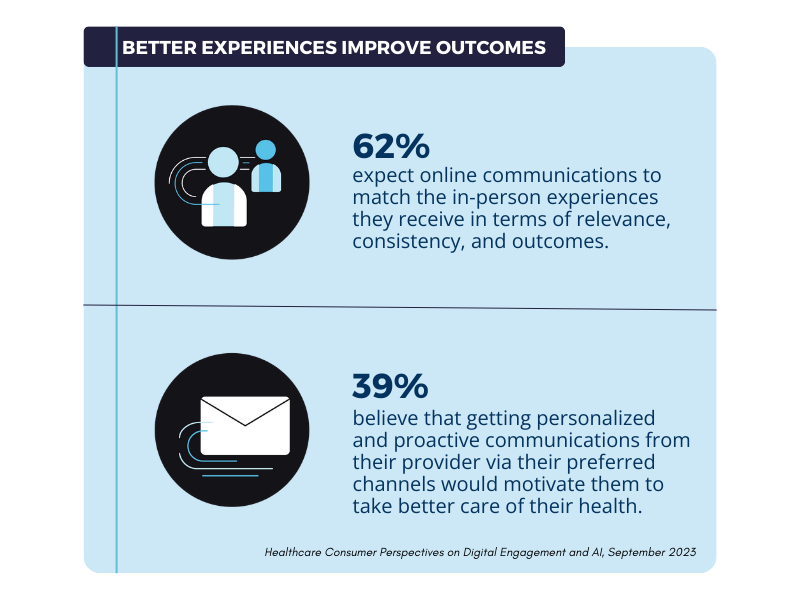
The 2023 Healthcare Consumer Perspectives on Digital Engagement and AI report conducted by Dynata Research found that more patients are adopting digital tools to manage their health and want their providers to provide a consistent experience across all channels. To improve the patient experience, a personalized patient engagement strategy is necessary.

Personalized Patient Engagement Improves the Patient Experience

Healthcare organizations manage so much data that can be used to improve the patient experience. As audience segmentation and personalization techniques have become more common in other industries like e-commerce and personal care, consumers are starting to expect the same experiences from their healthcare providers.

For example, media streaming services make personalized recommendations for new shows based on what you have previously watched. People like these features because it helps them discover new content they may not know about. Likewise, patients are beginning to expect a similar personalized patient engagement experience from their healthcare provider. Suppose a patient wants to control their diabetes diagnosis and communicates with their provider about this at an appointment. Afterward, when they log into the patient portal or receive follow-up information, they expect to receive relevant information that aligns with that provider’s conversation.

survey data patient preferences

Proactive, personalized patient engagement can also drive patients to make the right choices in managing their health. By sending patients the correct information at the right time in the context of their individual health journey, it is easier for them to manage their own health.

Shifting Preferences for Digital Tools Enable Personalized Patient Engagement

As more people are open to incorporating digital tools into their healthcare journeys, it has revealed new patient engagement opportunities. Several reasons led healthcare organizations to embrace digital tools. The coronavirus pandemic kicked off a necessary wave of digital transformation because of the rapid transmission of the disease through close contact. The desire to use these tools has remained strong even after institutions largely reopened in 2021. Patients have also shown no desire to go back to the way things used to be. Digital channels and tools like patient portals, email, medical devices, and mobile applications all make it easier for patients to manage their health on the go.

shifting digital preferences survey data

As patient preferences have shifted to embrace digital channels and technologies, organizations that can implement digital-first personalized patient engagement strategies intelligently are more likely to have satisfied and healthier patients. However, healthcare organizations must strive to provide a consistent experience across both in-person and digital avenues. According to the survey, the number one reason consumers would consider changing their healthcare provider is “complex or confusing experiences.” Poorly implemented and executed patient engagement can negatively impact the patient experience and retention, so it’s essential to be thoughtful in your approach.

How to Personalize the Patient Experience

Traditionally, HIPAA compliance requirements have made it difficult for healthcare providers to utilize protected health information (PHI) in personalized patient engagement efforts. Using PHI in communications is vital to craft messaging relevant to the patient’s health journey. However, when transmitting and storing PHI, HIPAA regulations must be followed to protect patient privacy.

The first step to executing personalized patient engagement involves selecting the right tools. Many traditional digital engagement tools are not designed to meet these stringent encryption and security requirements. By selecting tools that meet HIPAA’s technical requirements (like LuxSci’s Secure Marketing and Secure High Volume Email) and properly training employees, healthcare teams can employ the same segmentation and personalization techniques to reach patients with relevant and consistent communications.

Conclusion

Personalizing patient engagement is one way to improve patient marketing and retention. Contact us today to learn more about improving the patient experience with secure email communications.