LuxSci

Popular Posts

What is HIPAA compliant email?

What Are HIPAA Secure Email Requirements? A Detailed Guide for Healthcare Providers

This concise guide answers the often-asked question of ‘what are HIPAA secure email requirements?’. We’ll explore the essential components of HIPAA secure email and the measures healthcare organizations must take to best protect the sensitive patient and customer data under their care. 

In healthcare, email often includes protected health information (PHI), and any transmission of PHI via email must ensure that this sensitive data is protected from unauthorized access and subsequent exposure. 

HIPAA compliant email refers to a HIPAA secure email service that meets the privacy and security standards set by the Health Insurance Portability and Accountability Act (HIPAA). In the pursuit of securing patient data and ensuring each individual’s right to privacy, HIPAA has issued a series of guidelines designed to protect sensitive patient data during email transmission. 

HIPAA Secure Email Requirements In Detail

To be classified as HIPAA secure email, an email system must meet a range of privacy and security requirements designed to protect sensitive patient data.

Let’s begin with a deeper dive into the essential requirements of a HIPAA compliant email provider:

Encryption

Encryption is the cornerstone of HIPAA compliant email. Both in-transit encryption (when the email is sent) and at-rest encryption (when the email, and, by extension, the PHI it contains, is stored on the server) are mandatory HIPAA requirements.  

End-to-end encryption safeguards PHI from being accessed by malicious actors, e.g. hackers and other cybercriminals, even if they get hold of it. Without proper encryption, in contrast, the sensitive health information contained in emails can easily be interpreted, and, consequently, has value if intercepted. 

Better still, encryption for HIPAA secure email needs to be automated and flexible. Flexibility refers to the email provider’s ability to match the type of encryption with the recipient’s security posture. Automation, meanwhile, ensures that PHI is encrypted without the need for a manual process by the email user or human intervention. These capabilities not only reduce the potential for human error but also diminish the admin overhead of securing PHI. 

Access Control

HIPAA email rules require strict access controls to ensure that only authorized personnel can access sensitive data. Not everyone at a healthcare organization, or a third party that happens to have access to their data in the course of their business relationship, should have access to patient data. With this in mind, access to PHI must be enforced through risk mitigation measures such as user authentication, multi-factor authentication (MFA), and role-based access controls (RBAC).

MFA, for instance, requires users to verify their identity beyond their login credentials. This could include something they know (a secret phase, a one-time password (OTP), something they have (a keycard or security token), or something they are (i.e., biometrics: retinal scans, fingerprints, etc.). The reason it’s called multi-factor authentication is that healthcare organizations can implement as many authentication measures as warranted by the sensitivity of the patient data. 

Audit Trails

HIPAA mandates that all access to PHI be logged for auditing purposes. This includes tracking the sender, recipient, timestamps, and any modifications to the email or its contents. Audit logs ensure that any unauthorized access or potential breach can be investigated, addressed, and, above all, contained promptly. For HIPAA secure email compliance, audit logs must be kept for a minimum of six years and must be easily accessible for compliance audits.

Business Associate Agreement (BAA)

When using third-party email providers, such as LuxSci, healthcare organizations must enter into a Business Associate Agreement (BAA). This legally binding contract ensures that the email provider, i.e., the business associate, is also held to HIPAA’s security and privacy requirements. By the same token, the BAA covers the responsibilities of the healthcare provider – or ‘covered entity’ – in safeguarding PHI and outlines penalties for non-compliance for both parties.

HIPAA Secure Email Best Practices 

To ensure your email system meets HIPAA’s compliance standards and remains secure, it’s critical to follow these best practices. If you’re unsure where to start when it comes to tightening up your compliance efforts, start with these essential principles:

  1. End-to-End Encryption: A HIPAA compliant email provider must implement end-to-end encryption: meaning that PHI is encrypted when sent and decrypted only by the intended recipient. LuxSci’s encryption protocols ensure that PHI is never exposed during the transmission process or in storage.
  2. Implement Multi-Factor Authentication (MFA): to further enhance the security of your email communications, expand your IT infrastructure to enable MFA. This ensures that unauthorized parties cannot access email accounts even if login credentials are compromised. MFA adds another layer of protection by requiring as many factors of identification as the PHI demands.
  3. Regular Audits: conduct regular audits to ensure that all actions on email communications are properly logged, tracked, and record who accessed patient data and for what purpose. As well as malicious behavior, these audits can highlight overly generous access privileges and enable security teams to tighten up their policies and protocols. 
  4. Continuous Monitoring: as well as regularly auditing PHI access logs, you need to deploy a continuous monitoring solution to remain aware of suspicious behaviors and potential attempts at data breaches. Without continuous monitoring, malicious actors have the opportunity to infiltrate your network between periodic risk assessments. 
  5. Employee Education and Training: if your staff isn’t educated on how to handle sensitive patient data, all your other efforts to safeguard PHI are likely to be undermined. In light of this, training your workforce on HIPAA regulations, how to adhere to them, and the potentially dire consequences of failing to comply with their standards, must be a top priority. 
  6. Choose a Trusted, HIPAA Compliant Email Provider: the email provider you select must offer features specifically designed to meet HIPAA standards, removing a lot of the complications from achieving compliance in the process. 

Why Choose LuxSci for Your Organization’s HIPAA Secure Email Communication Needs?

When it comes to safeguarding PHI, LuxSci offers the security of flexibility and automated end-to-end encryption, unparalleled scalability, and best-in-class deliverability to carry out effective, high-volume HIPAA-compliant email campaigns.

Whether you’re a growing practice or a large healthcare company, our solutions facilitate effective email engagement, while maintaining the highest standards of email security and compliance.

Here’s are the ways LuxSci’s leading solutions help ensure HIPAA-compliant email communication within your healthcare organization, no matter the size of your company, or the volume of emails you send:

HIPAA Secure Email Gateway for Google Workspace and Microsoft 365

LuxSci’s Secure Email Gateway is the perfect solution for smaller healthcare organizations or those already using Google Workspace or Microsoft 365. Our service enables you to make your existing email system HIPAA compliant without disrupting your current workflow and user experience. LuxSci’s Secure Email Gateway automatically applies end-to-end encryption, ensuring that all emails containing PHI are securely transmitted. The best part? The process is automated and transparent to users, requiring no extra steps and causing no interruptions.

Secure High Volume Email Solution for Large Healthcare Organizations

For larger healthcare providers and organizations that send thousands or millions of emails per month, LuxSci’s Secure High Volume Email solution provides a scalable, highly secure solution that ensures compliance without sacrificing performance. Whether you’re sending newsletters, appointment reminders, preventative care emails, or other communications to a large patient or customer base, our solution delivers best-in-class HIPAA-compliant email deliverability rates of 95% or higher. 

Flexible, Automated Encryption with SecureLine Technology

At the heart of LuxSci’s HIPAA-compliant email solutions is our SecureLine technology, our proprietary flexible and automated encryption service. SecureLine enables highly flexible, automated encryption that adapts to the security posture of your recipients’ servers, ensuring that messages reach the intended recipient. Whether you are sending individual messages or conducting a bulk email outreach campaign, SecureLine automatically handles the encryption, keeping your email communications protected, secure and private from end-to-end.

Scalability for Large Enterprises

LuxSci’s infrastructure supports some of the largest healthcare organizations in the world, providing the scalability needed to handle high volumes of sensitive communications, including sending hundreds of millions of emails per year. As your organization grows, LuxSci can scale its solutions to meet your needs, ensuring that you maintain HIPAA compliance and a seamless, secure email experience.

Contact LuxSci Today

If you have any questions or concerns about HIPAA secure email requirements or would like to learn more about how LuxSci can help secure your healthcare communications, don’t hesitate to contact us. 

We’ll be happy to discuss your unique needs and help you find the right solutions to help your organization become more secure, compliant, and better at engaging with your patients and customers.


LuxSci Data-Driven Healthcare

Data-Driven Healthcare: Leveraging PHI for Personalized Patient Engagement

As the healthcare industry moves toward delivering more efficient, value-driven care, the effective use of patient data, including Protected Health Information (PHI), to personalize communications is an essential component of data-driven care: strategies for improving engagement, fostering trust, and promoting healthier patient outcomes. 

However, using PHI in email and communications to facilitate data-driven care requires careful attention to implementing the appropriate security measures required to safeguard sensitive patient data and satisfy HIPAA compliance requirements. 

In this article, we detail how healthcare providers, payers, and suppliers can securely use PHI to tailor email messages and improve patient relationships using a data-driven approach, delivering greater efficiency and a greater experience for all.

What is data-driven care?

Data-driven care involves the use of patient data, analytics, and, in recent years, AI-driven insights to improve decision-making, personalize treatments, and improve health outcomes for patients.

In the past patient care was driven by clinical experience, generalized treatment protocols, and, the comparatively limited data kept on paper records. Naturally, despite healthcare professionals doing their best, this approach had several limitations. Clinical experience can easily be defied by unique health circumstances. Patients may not respond to general treatment plans, and paper records are prone to loss, damage, and human error, as well as being often slow and/or complicated to transfer.

Fortunately, the digitization of patient data (transforming it from PHI to ePHI (electronic protected health information) marked the advent of data-driven care. With patient data stored in Electronic Health Record (EHR) systems, customer data platforms (CDP), and revenue cycle management platforms (RCM), it became easier for healthcare organizations to store, update and, most importantly, back up and share patient data. 

Additionally, advanced analytics has made it easier for healthcare companies to offer more effective proactive outreach and engagement, based on pertinent data points, as opposed to merely reacting to symptoms that a patient may display over time.  

Better still, technological advancements have shown that we’re just scratching the service when it comes to the advancement and potential of data-driven care. For example, AI models are becoming increasingly effective at designing personalized treatment plans for patients: using the ePHI collected by their healthcare providers. 

As these digital solutions grow in sophistication and dependability, they’ll be able to consistently assist healthcare professionals in treating, engaging and marketing to patients effectively. Should these technologies reach their potential, patients will better respond to their personalized treatment plans, and healthcare providers will be able to treat more patients in less time – and a greater number of people will enjoy positive health outcomes and a better quality of life.  

What Are the Benefits of Data-Driven Care?

  1. Better Decision-Making: the more information a healthcare professional any segment of the industry has at their disposal, the better their ability to make decisions about potential treatment options, education and communications, and ongoing care.
  2. Personalized Treatment Plans: using patient history, genetics, and lifestyle data, applications can tailor treatments to an individual’s state of health.
  3. Early Disease Detection: predictive analytics help identify health risks before symptoms appear, increasing the chances of a condition being caught early and becoming more detrimental to the patient’s health
  4. Operational Efficiency: better decision-making saves time, preserves scarce resources, and helps ensure healthcare practitioners are employed to their full capabilities.
  5. Better Patient Engagement: data-driven insights promote proactive patient communication, such as appointment reminders, annual check-up or test reminders, and preventative care advice. 

How Does Data-Driven Care Relate to HIPAA Compliance?

Data-driven care depends on collecting, storing, and sharing sensitive patient data, which must comply with HIPAA’s Privacy and Security Rules, both of which are designed to ensure that the proper safeguards are put in place to secure ePHI. With this in mind, key compliance concerns surrounding data-driven care include:

  • Data Security: ensuring end-to-send PHI encryption in transit and at rest.
  • Access Controls: limiting PHI access to authorized personnel only, i.e., those who have reason to access it as part of their jobs. 
  • Third-Party Risk Management: ensuring you have Business Associate Agreements (BAAs) in place with any third parties with access to the PHI under your care, e.g., email platforms, equipment suppliers, online pharmacists, etc.
  • Audit Trails & Compliance Reporting: tracking who accesses patient data and how it’s used. Additionally, retaining copies of these logs for extended periods as per differing compliance regulations (e.g., retaining them for six years as per HIPAA regulations).

What Types of PHI Can Be Used in Email Communications?

When it comes to using PHI for personalized emails, healthcare organizations need to be clear about what information can be included. PHI can encompass a wide range of data, including:

  • Personal Identifiers: these identifiers include a patient’s name, address, contact details, Social Security number, and other personal information. On their own, they may not necessarily count as PHI, but when medical-related data, it must be secured as per HIPAA regulations. 
  • Medical History: conditions, diagnoses, treatment plans, lab results, and medications.
  • Clinical Data: this includes test results, imaging reports, medical procedures, surgical history, and appointment information.
  • Treatment Information: recommendations for medications, treatments, and care plans, which can be personalized based on the patient’s health needs and the PHI held by their healthcare providers.
  • Insurance and Billing Information: Information related to insurance coverage, claims, and billing.

These valuable data insights of PHI can be included in email communications to craft relevant, tailored content that resonates with the patient or customer, but only of you’re email is HIPAA compliant.

For example, a healthcare provider might send an email about a new medication to a patient who has been recently diagnosed with a specific condition. Similarly, an insurance provider could send a tailored wellness program and preventative care tips based on the patient’s health data.

You can discover more ways to make effective use PHI of in your email engagement campaigns in a comprehensive guide to HIPAA-compliant personalization

Benefits of Using PHI for Personalized Patient Engagement

When used effectively, and, above all, securely, personalized communication based on the intelligent use of PHI can lead to numerous benefits for healthcare providers, payers, and suppliers, which include, but aren’t limited to:

  • Improved Engagement: patients and customers are more likely to open and engage with email communications that are relevant to their health needs and concerns. Personalized email messaging that uses PHI, including treatment suggestions, appointment reminders, or wellness tips, increases the likelihood of the recipient engaging with the message. 
  • Timely and Relevant Information: Sending timely messages, like reminders for health screenings, prescription refills, or post-operative care, keeps patients engaged with their care plan, ensures better adherence to prescribed medical advice, and takes a more active role in their overall healthcare journey. This is particularly important for chronic disease management, where proactive communication can help prevent complications and reduce hospital readmissions.
  • Better Relationships with Payers and Suppliers: healthcare payers and suppliers can also leverage PHI for personalized communications. For example, insurers can send targeted messages about new health plan options, plan renewals, claims processes, or wellness programs tailored to the patient’s health needs. Suppliers, meanwhile, can use data to communicate directly with patients about new product offerings, adherence tools, or therapies based on their present state of health. This personalized engagement can enhance customer satisfaction and loyalty.
  • Stronger Brand Loyalty: all combined, consistently engaging with patients and customers about topics related to their health needs and concerns – subjects, in some cases, they may not be discussing with anyone else – helps them develop trust in their healthcare providers. This, subsequently, makes them more receptive to future email communications, resulting in better adherence to treatment plans, better healthcare outcomes, and higher levels of satisfaction with their healthcare provision.

Ensuring HIPAA-Compliant Data-Driven Care 

Before any PHI is included in email communications, healthcare organizations must follow proper security protocols to ensure HIPAA compliance. Here are some of the most fundamental ways to ensure HIPAA compliance when implementing data-driven care practices. 

1. Patient Consent

First and foremost, healthcare organizations must obtain explicit consent from patients before sending their PHI via email. Patients should be informed about the types of communications they will receive and should have the option to opt in or opt out of receiving different types of communications containing PHI.

2. Encryption

Encrypting email communications is essential to protecting PHI. Email encryption ensures that the message is unreadable to a malicious actor if it’s intercepted during transmission. Any email that contains PHI must be encrypted end-to-end, i.e., in transit and at rest, which includes both the message content and any attachments. It’s also important that the email service being used is fully HIPAA-compliant, meaning it must have the technical safeguards required under its stringent regulations.

3. Secure Email Solutions

HIPAA-compliant email platforms, such as LuxSci, offer built-in, automated encryption, authentication, and access controls to safeguard patient data. These solutions ensure that PHI is only accessible to authorized individuals and that the integrity and privacy of the data are maintained.

4. Access Control and Authentication

To protect PHI, email systems must be configured with strict access control measures. This includes setting up multi-factor authentication (MFA) for accessing email accounts or documents that contain sensitive data. MFA adds an additional layer of security, ensuring that even if a password is compromised, the account cannot be accessed without additional verification methods, e.g., a security access token, or biometric scan.

5. Data Minimization

When sending PHI via email, it’s important to limit the amount of information shared to what is necessary for the communication. For instance, while treatment instructions may be relevant, healthcare organizations must avoid sharing overly detailed medical histories or unnecessary personal identifiers when it’s outside the scope of the communication, or the topic being discussed. 

By the same token, data minimization must also apply to access control privileges, ensuring that those who handle PHI only have access to the patient data they require for their job role. 

How LuxSci Can Help with Data-Driven Care

At LuxSci, we specialize in providing secure, HIPAA-compliant solutions that enable healthcare organizations to execute effective, personalized data-driven care communication campaigns.  With over 25 years of experience, helping 2000 healthcare organizations securely deliver more than 20 billion emails, LuxSci thoroughly understands the intricacies of HIPAA compliance and has crafted powerful tools designed for the particular security and regulatory needs of the healthcare industry. 

To learn more about how LuxSci can help your organization leverage PHI for personalized, secure email communications, contact us today. We’re here to help you create more meaningful patient and customer relationships using today’s latest healthcare strategies, including data-driven care.

LuxSci PHI Identifiers

What You Need to Know About PHI Identifiers

It’s hard to understate the benefits of using protected health information (PHI) in your patient engagement efforts. By effectively leveraging PHI, you can create highly-targeted and personalized email marketing campaigns, which have greater potential to connect with your patients and customers – and drive your desired outcomes.

However, before diving in, it’s essential to be aware of HIPAA’s complex compliance requirements and how they govern healthcare organizations’ marketing communications. Chief among these considerations is the concept of PHI identifiers and the role they play in classifying and protecting sensitive patient data. With this in mind, let’s explore HIPAA’s 18 PHI identifiers

What is a PHI Identifier?

Before we detail the 18 different PHI identifiers, it’s crucial to first distinguish between what counts as PHI and what, in reality, is personally identifiable information (PII).

PHI (as well as its digital equivalent or electronic protected health information (ePHI)), is defined as “individually identifiable protected health information” and specifically refers to three classes of data:

  • An individual’s past, present, or future physical or mental health or condition.
  • The past, present, or future provisioning of health care to an individual.
  • The past, present, or future payment-related information for the provisioning of health care to an individual.

In short, for an individual’s PII to be classed as protected health information it must be related to a health condition, their healthcare provision, or the payment of that provision. So, a patient’s email address in isolation, for example, isn’t necessarily PHI. However when combined with any information about their healthcare – such as in a patient engagement email campaign – it would constitute PHI.

Put another way, as HIPAA is designed to enforce standards and best practices in the healthcare industry, it’s concerned with protecting health-related information. While the protection of general PII is of the utmost importance, that’s a significantly larger remit – and, consequently, one that’s shared by a variety of data privacy regulations covering different industries and regions (PCI-DSS, GDPR, etc.).

What are the 18 PHI Identifiers?

With the above background in mind, we now have a clearer understanding of what is classed as PHI and, as a result, what data needs to be de-identified. The HIPAA Privacy Rule provides two methods for the de-identification of PHI: the Expert Determination and Safe Harbour methods.

Expert Determination requires a statistical or scientific expert to assess the PHI and conclude that the risk of it being able to identify a particular patient is very low. Safe Harbour, meanwhile, involves systematically removing or securing specific data types to mitigate the risk of patient identification. It’s from the Safe Harbour method that we get the following 18 PHI identifiers:    

  • Patient Names
  • Geographical Elements: street address, city, and all other subdivisions lower than the state.
  • Dates Related to Patient’s ID or Health History: eD.O.B, D.O.D, admission and discharge dates, etc.
  • Telephone Numbers
  • Fax Numbers
  • Email Addresses
  • Social Security Numbers
  • Medical Record Numbers
  • Health Insurance Beneficiary Numbers
  • Account Numbers
  • Certificate or License Numbers: as these can confirm an individual’s professional qualifications or credentials, and when combined with PHI, are exploitable by malicious actors.
  • Vehicle Identifiers: i.e., license plate and serial numbers
  • Device Identifiers and Serial Numbers: those belonging to smartphones, tablets, or medical devices, because they communicate with healthcare companies during provision and can be linked back to the patient
  • Digital Identifiers: namely website addresses used by healthcare companies that patients may visit (for healthcare education, event registration, etc.)
  • Internet Protocol (IP) Addresses: the digital location from where a patient’s device accesses the internet; this can be used to acquire subsequent PHI
  • Biometric Identifiers: e.g., fingerprints, voice samples, etc.
  • Full Face Photographs: in additional to other comparable images
  • Other Unique Numbers, Codes, or Characteristics: not covered by the prior 17 categories

As illustrated by the above list, HIPAA’s list of PHI identifiers is comprehensive, covering all aspects of an individual’s identity and digital footprint. In light of this, when handling patient data it’s crucial to use platforms and digital solutions that have been designed with the secure transmission and storage of PHI in mind.

Harness the Benefits of Using PHI for Better Patient Engagement

As the most experienced provider of HIPAA-compliant communications, LuxSci specializes in secure email, text, marketing and forms for healthcare providers, payers and suppliers. LuxSci’s Secure Healthcare Communications suite offers flexible encryption, customizable security policies, and automated features to ensure HIPAA compliance and the protection of PHI data.

Interested in discovering how LuxSci’s solutions can help you securely engage with your patients and customers?

Contact us today!


LuxSci HIPAA Compliant Marketing FAQs

HIPAA-Compliant Email Marketing FAQs

Email is an essential channel for most healthcare marketers, but HIPAA compliance requirements can make it challenging to execute effective engagement campaigns without violating patient privacy.

HIPAA is a complicated set of regulations that while offering a lot of guidance, does not mandate the use of any specific technologies to protect patient privacy. This ambiguity causes a lot of confusion for marketers looking to integrate email into their healthcare engagement campaigns.

With this in mind, this article addresses some frequently asked questions (FAQs) about HIPAA-compliant email marketing and offers advice for securing patient data and future-proofing your marketing.

Frequently asked HIPAA compliant email marketing questions

Do Generic Newsletters Need To Be Protected?

What Is An Email API?

Does HIPAA Allow Healthcare Providers To Send Unencrypted Emails With PHI To Patients?

Can Patients Exercise Their Right Of Access By Receiving PHI via Unencrypted Email?

Is Microsoft 365 Sufficient For Marketing Emails?

What Are Common Email Marketing Use Cases For Healthcare?

How Do I Find a HIPPA-Compliant Email Marketing Vendor?


Do generic newsletters need to be protected?

Some marketers assume newsletters from a healthcare provider or supplier do not contain health information and, therefore, do not fall under HIPAA requirements. This assumption, however, is often incorrect, with many surprised to learn that protected health information (PHI) can be implied from seemingly innocuous information.

As a result, many generic email newsletters often indirectly contain PHI due to the very fact that they are sent to lists of current patients or customers. This is because email addresses count as individually identifiable data and when combined with the message therein, it’s pretty simple to infer that they are patients or customers.

Let’s say, for example, that you send a newsletter to the patients of a dialysis clinic. An eavesdropper could infer that the recipients receive dialysis. Consequently, as the email reveals information about an individual’s health treatment, it contains PHI and should be secured in compliance with HIPAA regulations.

For the fundamental reason that it can be difficult to determine what classifies as PHI, it’s safer to skip the ambiguity entirely and use a HIPAA-compliant email marketing solution to ensure security.

What is an email API?

An Application Programming Interface (API) is a collection of protocols, or rules, that enable different applications to communicate with each other. APIs are a crucial aspect of modern applications – as they spare developers the considerable effort of creating application features from scratch – they can just connect to the API of an existing application.

For example, how many websites have you used that utilize Google Maps? This is because they have connected their site to the Google Maps API – integrating it into their application and providing another feature for their users.

In the case of an email API, it is a way for applications, such as customer relationship management (CRM) platforms, customer data platforms (CDP) and electronic health record (EHR) systems, to connect to email service providers. This then allows marketers to send emails through the application, using the ePHI (electronic protected health information) collected and stored within the application.

Additionally, marketers can view and further utilize campaign data through the powerful dashboards and analysis tools found in CRM systems and similar applications. Trigger-based transactional or marketing emails are ideal for sending with an email API, whereby emails are sent when pre-determined conditions in the application are met. Healthcare organizations may use email APIs to send appointment reminders using electronic health records system data about a patient’s upcoming appointments, check ups or treatments.

As invaluable as email APIs are, however, especially for streamlining and automation communication workflows, they are no substitute for a comprehensive email marketing platform. Email APIs do not include the contact management systems standard in most email marketing platforms, as all the data resides within the application they connect to. Additionally, email API tools do not typically include drag-and-drop editor tools and other design features that enable you to make your emails stand out and boost patient engagement.

Does HIPAA allow healthcare providers and companies to send unencrypted emails with PHI to patients?

Encryption is an addressable standard, i.e., it must be implemented by the organization unless a risk analysis concludes that implementation is not reasonable and appropriate, under the HIPAA Security Rule. This does not mean it is optional. The HIPAA Security Rule does not explicitly forbid unencrypted email. Still, it does state that “other safeguards should be applied to protect privacy reasonably, such as limiting the amount or type of information disclosed through the unencrypted email.”

In addition, the Department of Health and Human Services also states that “covered entities are permitted to send individuals unencrypted emails if they have advised the individual of the risk, and the individual still prefers the unencrypted email.” in response to this, some organizations use waivers to inform patients of the risks and acquire permission to send unencrypted emails.

However, we do not recommend this approach for several reasons:

  1. Keeping track of waivers over time and recording status changes and updates is challenging – and increases your administrative overhead.
  2. Signed waivers do not insulate you from the consequences of a HIPAA breach.
  3. Using waivers to send unencrypted emails doesn’t absolve you of your other HIPAA obligations, such as data retention and disposal. Subsequently, using a HIPAA-compliant email solution is more manageable and eliminates ambiguity.

Can patients exercise their right of access of receiving PHI voa unencrypted email?

Yes, but they must be fully informed of the risks and sign waivers acknowledging them; the caveats detailed in the above answer apply. Consequently, it’s always best to use an encryption tool to protect patient data.

Is Microsoft 365 with encryption sufficient for sending marketing emails?

Microsoft 365 can be configured with Office Message Encryption (OME) to comply with HIPAA. However, it is not well-suited for sending marketing emails. OME primarily relies on portal pickup encryption, in which the message is stored securely on a server and requires the recipient to log in to the portal to read the email. As a result, the portal adds friction to the marketing process that prevents optimal engagement and constrains ROI.

Marketing messages containing light-PHI, i.e. low-risk data, are best sent using Transport Layer Security (TLS) encryption. TLS-encrypted messages arrive in the recipient’s inbox just like a regular email and do not require them to complete an additional step.

Additionally, Microsoft 365 is not configured to send high volumes of email. If you plan on executing large scale marketing campaigns, you could unintentionally disrupt regular business communications by sending all the messages through the same infrastructure. Instead, you should separate your business and marketing email delivery activities to protect your IP reputation, i.e., the trustworthiness of your IP addresses and how likely it is your emails end up in a spam folder, and achieve your desired sending throughput.

What are the common email marketing use cases for healthcare?

Email marketing in healthcare is not restricted to boring general practice newsletters and other communications that fail to engage patients. When you successfully harness tools that enable you to use ePHI to better target and personalize your healthcare engagement campaigns – the sky is the limit. With consumer preferences shifting toward digital communications, marketers who know how to best utilize HIPAA-compliant email marketing – and tactics like segmentation and personalization – will prove more effective at reaching patients.

Examples of ways that healthcare marketers can use email include:

  • Lead generation campaigns
  • Promotions
  • Verifications
  • Order confirmations
  • Notifications
  • Upsell & cross-sell
  • Collecting data on the patient experience

How do I find a HIPAA-compliant email vendor?

Using popular email marketing platforms, such as Mailchimp, is not recommended. Many of these platforms were designed for  businesses, but are simply not secure enough to meet HIPAA requirements. We do not recommend using a solution not specifically equipped to meet the healthcare industry’s unique security and compliance needs. To determine if your email marketing provider is compliant, they must meet three broad criteria at a minimum.

  1. The vendor must sign a Business Associate Agreement (BAA) outlining how they plan to secure your data and what they will do in the event of a breach.
  2. Encrypt data at rest when it is stored in their systems.
  3. Encrypt data, i.e., email messages, in transit as sent to the recipients.

Not all vendors will be up to the task. Carefully vet your email marketing vendors to ensure they are taking steps to secure data and protect patient privacy.

Conclusion

Admittedly, HIPAA can be difficult to understand – but choosing the right tools and adequately vetting your vendors makes it far easier to successfully execute HIPAA-compliant email marketing campaigns.

As the most experienced HIPAA-compliant email provider, LuxSci specializes in providing secure and scalable communications for companies aiming to send hundreds of thousands – or millions – of emails. In light of this, we place security, compliance and personalization considerations front and center when building our solutions.

Interested in discovering how LuxSci’s secure healthcare communications solutions can transform your healthcare marketing and engagement efforts?

Contact us to learn more today!

HIPAA Email Rules

HIPAA Email Rules: What You Need to Know

The Health Insurance Portability and Accountability Act (HIPAA) is a complicated law that defines the standards for the secure collection, transmission, and storage of protected health information (PHI). When information is stored or exchanged electronically, the HIPAA Security and Privacy Rules require covered entities, i.e., organizations that handle PHI, to safeguard its integrity and confidentiality.

One of the most common ways that PHI is shared electronically is via email, so understanding HIPAA email rules is essential for achieving compliance and protecting sensitive data.

The HIPAA Email Security Rule

It’s important to note that HIPAA does not require the use of any specific technology or vendor to meet its requirements. Generally speaking, the Security Rule requirements for email fall into four categories:

  1. Organizational requirements state the specific functions a covered entity must perform, including implementing policies, procedures and obligations concerning business associate agreements (BAAs).
  2. Administrative requirements relate to employee training, professional development, and management of PHI.
  3. Physical safeguards encompass the security of computer systems, servers, and networks, access to the facility and workstations, data backup and storage, and the destruction of obsolete data.
  4. Technical safeguards ensure the security of email data transmitted over an open electronic network and the storage of that data.

Let’s move on to discussing some of the main requirements that apply to email and the steps you need to take to secure email accounts that transmit and store PHI.

HIPAA Email Rules: Compliance Checklist

While encryption gets most of the spotlight during discussions on email security, the HIPAA email rules, in contrast, cover a range of behaviors, controls, and services that work together to address eight key areas:

  1. Access
  2. Encryption
  3. Backups and Archival
  4. Defense
  5. Authorization
  6. Reporting
  7. Reviews and Policies
  8. Vendor Management

Let’s look at each aspect of HIPPA’s email rules in greater detail.

1. Access

Access controls help safeguard access to your email accounts and messages. Implementing access controls is essential to keep out unauthorized users and secure your data, with key steps including:

  • Using strong passwords that cannot be easily guessed or memorized – and changing them frequently, e.g. every 30 days.
  • Creating different passwords for different sites and applications.
  • Enabling multi-factor authentication (MFA).
  • Securing connections to your email service provider using TLS and a VPN.
  • Blocking unencrypted connections.
  • Pre-emptively installing software that remotely wipes sensitive email off your mobile device when it is stolen or misplaced.
  • Logging off from your system when it is not in use and when employees are away from workstations.
  • Emphasizing opt-out email encryption to minimize breaches resulting from human error.

2. Encryption

Email is inherently insecure and at risk of being read, stolen, intercepted, modified, and forged (repudiated). Covered entities should go beyond the technical safeguards of the HIPAA Security Rule and take steps that exceed what is required to futureproof their communications. Email encryption features to adopt include the following:

  • The ability to send secure messages to anyone with any email address.
  • The ability to receive secure messages from anyone.
  • Implementing measures to prevent the insecure transmission of sensitive data via email.
  • Exploring message retraction features to retrieve email messages sent to the wrong address.
  • Avoiding opt-in encryption to satisfy HIPAA Omnibus Rule.

3. Backups and Archival

HIPAA email rules require copies of messages containing PHI to be retained for at least six years. In light of this, organizations must consider the following:

  • How are email folders backed up?
  • Are there at least two different backups at two different geographical locations? Additionally, the processes updating these backups should be independent of each other as a measure against backup system failures.
  • Have you maintained separate, permanent, and searchable archives? While the emails should be tamper-proof, with no way to delete or edit them, they should be easily retrievable to facilitate discovery, comply with audit requests, and support business-critical scenarios.

4. Defense

Cyber threats against healthcare organizations are continually on the increase. Some may be surprised to learn that HIPAA compliant email rules mandate that organizations take steps to defend against possible malicious actors. With this in mind, consider implementing the following technologies:

  • Server-side inbound email malware and anti-virus scanning to detect phishing messages and malicious links.
  • Showing the sender’s email address by default on received messages.
  • Email filtering software to detect fraudulent messages and ensure it uses Sender Policy Framework (SPF), DomainKeys Identified Mail (DKIM), and Domain-based Message Authentication, Reporting and Conformance (DMARC) information to classify messages.
  • Scanning outbound email.
  • Scanning workstations for malware, i.e., viruses, ransomware, etc.
  • Using plain text previews of your messages.

5. Authorization

A critical aspect of HIPAA’s email rules is ensuring that cybercriminals cannot impersonate your company or employees. Configuring your domains with SPF and DKIM is essential to verify your identity as an authorized sender of mail from your domains. Also, ensure that users cannot send messages through your email servers without authentication and encryption.

6. Reporting

Setting accountability standards for email security is essential to establishing and strengthening your HIPAA compliance posture. Important steps to take include:

  • Creating login audit trails.
  • Receiving login failure and success alerts.
  • Auto-blocking known attackers.
  • Maintaining a log of all sent messages.

7. Reviews and Policies

Humans are the greatest vulnerability to any security and compliance plan, so creating policies and procedures that focus on plugging vulnerabilities and preventing human errors is essential. Strategies for reducing risk include:

  • Inviting independent third parties to review your email policies and user settings. Fresh, unbiased eyes can discover existing issues quickly.
  • Preventing devices that connect to sensitive email accounts from connecting to public WiFi networks.
  • Creating email policies prohibiting users from clicking on links or opening attachments that are not expected or requested.

8. Vendor Management

Most companies do not manage their email in-house, so it’s crucial to thoroughly research and vet whoever will be responsible for your email services. Perform an annual review of your email security and stay on top of emerging cybersecurity threats to take proactive action and for continued compliance with HIPAA email rules.

LuxSci’s secure high-volume email and marketing solutions are designed to help healthcare organizations tackle complicated HIPAA email rules and automate the compliance process. Contact us today to learn more about how our industry-leading HIPAA complaint email services can help you better secure your customer PHI and keep you in compliance.

Sending HIPAA Compliant Email

Sending HIPAA Compliant Email the Right Way

Maintaining HIPAA compliance is a critical requirement for healthcare providers, payers and suppliers dealing with protected health information (PHI). Ensuring your email communications align with those standards can be, well… tricky. With fines reaching into the millions, non-compliance isn’t something you want to risk. We’ve seen it time and time again when engaging with our customers and prospects. Unfortunately, many organizations fall into the trap of believing they’re sending HIPAA compliant emails because they’ve applied what we call “self-certification” strategies—without fully understanding what’s required to be compliant.

Are you 100% sure that you’re sending HIPAA compliant emails?

In this blog post, we’ll delve into the risks of being non-compliant, explain why self-certification strategies often lead to problems, and provide a HIPAA-compliant email checklist to help ensure your organization avoids the pitfalls self-compliance.

The Importance of Sending HIPAA Compliant Emails

HIPAA (Health Insurance Portability and Accountability Act) was established to ensure the protection and privacy of patients’ PHI. This law mandates that any entity handling PHI must implement strict safeguards to prevent unauthorized access, breaches, and exposure of sensitive patient data.

In today’s digital world, where healthcare communications often take place over email and other digital platforms, maintaining HIPAA compliance becomes even more complex. It’s not enough to merely think you’re compliant; you must be able to prove it beyond a doubt.

What Is PHI and Why Does It Need to Be Protected?

As a quick reminder, PHI refers to any data that can be used to identify an individual and that relates to their past, present, or future health condition. This can include anything from personal identification information to medical records and billing information to email exchanges that reference patient care.

Examples of PHI include:

  • Names
  • Addresses
  • Birth dates
  • Social Security numbers
  • Medical history and diagnoses
  • Treatment plans & prescriptions
  • Medical device usage and services
  • Appointment information
  • Billing, payments and insurance information

The Risks of Not Being 100% Sure About HIPAA Compliance

In addition to losing sleep at night, the consequences of sending non-compliant emails can be significant. Non-compliance can result in hefty penalties, ranging from $100 to $50,000 per violation, depending on the severity and intent. In some cases, these fines can even surpass $1.5 million annually.

But it’s not just the fines—PHI exposure opens the door to a variety of serious risks, including the reputational damage that can stem from breaches of patient data that can impact peoples’ lives and the future of your business. Patients place immense trust in healthcare providers and organizations to safeguard their sensitive information, which stretches beyond HIPAA-compliance to overall data security and privacy. The loss of patient trust is difficult—if not impossible—to regain once compromised.

Sending HIPAA Compliant Email

The Problem with DIY HIPAA Compliance

Simply put, self-certifying HIPAA compliance is a recipe for disaster. Many companies and healthcare organizations falsely believe that if they conduct an internal review or have implemented basic security measures, they’re fully compliant. But without the right expertise and the right technology in place, especially encryption, it’s easy to overlook crucial details.

Even if you have encryption in place or think your emails are safe, these minimal steps can create a false sense of security. True HIPAA compliance requires continuous monitoring, updating of policies, and regular training to address potential risks.

A Checklist for Sending HIPAA Compliant Email

Sending HIPAA compliant email means ensuring you’ve implemented the following safeguards:

1. Encryption Standards for HIPAA Compliance

All emails containing PHI must be encrypted both at rest and in transit—end-to-end. Ensure your email service provider offers high-grade encryption protocols, like TLS (Transport Layer Security), for sending and receiving messages, and flexible options, including dedicated cloud infrastuctures for the highest levels of data protection.

2. Secure Access and Authentication

Set up multi-factor authentication (MFA) and role-based access controls to limit who can access emails containing PHI.

3. Business Associate Agreements (BAA)

If you’re using a third-party email provider, you must have a signed BAA. This agreement ensures that the provider will uphold HIPAA’s security standards.

4. Data Backup and Recovery

Make sure your email system has a secure backup and recovery solution. Data breaches can happen, but having a recovery plan will minimize damage and maintain compliance.

5. Employee Training and Awareness

Ensure your employees are regularly trained on HIPAA guidelines. Human error is one of the leading causes of HIPAA violations, so proper education is key.

6. Regularly Audit Your HIPAA Compliance Strategy & Practices

HIPAA regulations evolve as technology advances. Conducting regular compliance audits ensures your security protocols are up to date with the latest best practices.

7. Avoiding Overconfidence in Your Own Processes

No matter how confident you are in your HIPAA strategy, bringing in an external auditor can provide an unbiased view of your compliance status and help identify overlooked vulnerabilities.

Don’t Let HIPAA Self-Certification Fool You!

HIPAA compliance is not something you can afford to be unsure about. The risks—both financially and reputationally—are too great. While it may be tempting to “self-certify” or assume your current measures are sufficient, doing so can leave your organization—and your patients and customers—vulnerable. Instead, ensure that you follow a comprehensive strategy that includes best-in-class email encryption, secure access, regular audits, employee training, and support from external experts.

Don’t take shortcuts when it comes to protecting sensitive health information and ensuring HIPAA compliance—get it right from the start.

If you’d like to get your questions on sending HIPAA compliant email answered, don’t hesitate to reach out to talk with one of our experts—and learn more about the healthcare industry’s leading HIPAA-compliant email, text and marketing solutions from LuxSci.

Contact us here!

Risks of not sending HIPAA-compliant email

Know the Requirements for Sending HIPAA-Compliant Emails

Sending HIPAA-compliant emails continues be a core requirement for effective healthcare engagement, including for care management, patient and customer communications, and preventative care, as well as for marketing and data collection efforts. At the same time, patient and customer protected health information (PHI) can never be compromised, making it critical to understand the risks and requirements for sending HIPAA-compliant emails.

The Risks of Non-Compliance

  1. Data Breaches: Failing to send HIPAA-compliant emails can lead to data breaches. When patient information is sent through unsecured channels, it becomes vulnerable to unauthorized access. This not only jeopardizes patient and customer privacy but also opens up the possibility of identity theft and fraud. Personal medical details falling into the wrong hands is a nightmare scenario that can easily be avoided with proper email security measures.
  2. Hefty Fines and Legal Action: Failing to adhere to HIPAA regulations can result in significant fines and legal action. The U.S. Department of Health and Human Services (HHS) Office for Civil Rights (OCR) is vigilant in enforcing HIPAA rules, and violations can lead to penalties ranging from thousands to millions of dollars, depending on the severity and negligence involved. For any healthcare organization or associated business, these financial penalties can be devastating.
  3. Loss of Trust: The loss of trust from patients and customers can be an irreversible blow to your reputation. In a field where confidentiality is a requirement, mishandling sensitive information can lead to a breakdown in patient-provider relationships, harming your organization’s credibility and future business.
  4. Operational Disruptions: Data breaches and compliance issues can lead to operational disruptions. Addressing a breach requires time, resources, and often halts regular operations, affecting the quality of care provided to patients, customer experiences, and overall business efficiency.
  5. Criminal Charges: In severe cases, non-compliance with HIPAA regulations can result in criminal charges against the individuals responsible for the breach. This could include imprisonment and other serious legal consequences.

Tips for Sending HIPAA-Compliant Emails

  1. Use Encrypted Email Services: Ensure that all email communications involving patient information are encrypted. Encryption converts the data into a code to prevent unauthorized access, making it a crucial tool for securing protected health information.
  2. Implement Access Controls: Limit access to sensitive information to only those employees who need it to perform their job duties. This minimizes the risk of unauthorized access and potential breaches.
  3. Regular Training: Conduct regular training sessions for your staff on HIPAA compliance and the importance of securing patient and customer information. Keeping everyone informed about the latest practices and threats is key to maintaining a secure environment.
  4. Audit and Monitor: Regularly audit and monitor email communications and data access. This helps identify and address any vulnerabilities or suspicious activities promptly.
  5. Use HIPAA Compliant Email Solutions: Invest in email solutions specifically designed to meet HIPAA standards. These solutions often come with built-in security features such as automated encryption, access controls, and audit trails.

How to Evaluate HIPAA-Compliant Email Solutions

  1. End-to-End Encryption: Best-in-class solutions offer end-to-end encryption to protect data in transit and at rest, using a dedicated cloud infrastructure for maximum security.
  2. Automated encryption: Make sure solutions can automatically encrypt every email sent versus requiring user intervention to ensure security and HIPAA compliance.
  3. Access Controls: Look for solutions that provide strong access controls, including multi-factor authentication, to ensure only authorized personnel can access sensitive information.
  4. Audit Trails: Maintaining detailed audit trails is a must-have to track who accessed information and when. This is crucial for compliance and identifying potential breaches.
  5. Regular Updates and Support: Work with vendors that provide regular updates and strong customer support to address issues promptly, and to stay up to speed and compliant with the latest regulations.

How do you rate your HIPAA compliant communications efforts?

Take the LuxSci HIPAA Compliance Communications Health Check to find out – it’s 5 minute survey that gets you a personalized report on how your organization can benefit from the latest innovations and capabilities for secure healthcare communications. Take the assessment here.

Ensuring your emails are HIPAA compliant is not just about avoiding fines; it’s about safeguarding patient and customer privacy, maintaining their trust, and expanding your business with better healthcare engagement. By uusing secure healthcare communication services and adhering to HIPAA guidelines, you can protect sensitive information, improve the healthcare journey, and deliver better outcomes for your patients – and for your business.

LuxSci Secure Marketing

Webinar: How to Harness HIPAA-Compliant Marketing & Workflows

In today’s connected world with millions of messages bombarding people every second of the day, personalized engagement over digital channels is a requirement for any business – especially in healthcare. However, ensuring that your marketing efforts comply with the Health Insurance Portability and Accountability Act (HIPAA) can be a daunting task that never quite gives you the peace of mind you need. The good news is that you don’t have to lose sleep at night worrying about whether your marketing campaigns are secure and protected from data breaches and outside threats. With the right strategies and solutions, you can create HIPAA-compliant marketing campaigns that not only keep data protected, but also boost lead conversions, improve outcomes, and reduce costs.

Here are some simple but necessary steps to get you off and running with HIPAA-compliant marketing campaigns today:

  1. Understand HIPAA Requirements

Before embarking on any marketing campaign, it’s crucial to have a thorough understanding of HIPAA regulations. HIPAA sets strict guidelines for keeping protected health information (PHI) safe. Ensure your marketing team is well-versed in these regulations to avoid any compliance failures. If you’re not sure, check out this recent LuxSci blog post on understanding encryption requirements for HIPAA-compliant email.

  1. Leverage Automated Data Encryption

Safeguarding protected health information (PHI) is a requirement with HIPAA. Use advanced encryption methods – including dedicated cloud infrastructures and automation that encrypts every email sent with no user intervention required – to secure patient and customer data both in transit and at rest. This ensures that any data shared during marketing campaigns remains confidential and secure from breaches.

  1. Implement Consent Management

Obtaining explicit consent from patients and customers before using their information in marketing campaigns is a also requirement and non-negotiable. Make sure you have a consent management system that records, stores, and manages patient and customer consent effectively and efficiently.

  1. Personalize and Hypersegment Campaigns Using PHI Data

HIPAA does not need to hold you back. In fact, using PHI data can take your email targeting and messages to the next level. Personalized marketing can significantly improve patient and customer engagement and increase your lead conversions. Use PHI data to tailor your marketing messages to the specific needs and preferences of precise segments to ensure content is relevant and valuable – and actionable.

  1. Utilize Encryption for All Healthcare Communications

Communicating with patients and healthcare customers through secure channels is essential for ALL communications, not just those that require HIPAA compliance. Use flexible encrypted email services, secure messaging apps, and patient portals to share sensitive information, and protect yourself from the latest cybersecurity threats at all times.

  1. Monitor, Analyze and Improve Marketing Campaigns

Regularly test, monitor and analyze your marketing campaigns to ensure ongoing HIPAA compliance and the best results, using data on emails delivered, opened, clicked and secured. Take action in real-time to improve segmentation and results based on your latest business needs and deliverability requirements.

Benefits of HIPAA-Compliant Marketing

Implementing HIPAA-compliant marketing strategies offers numerous benefits, including:

  • Improved healthcare experiences – Personalized and secure communications build trust and strengthen relationships with patients and customers.
  • More lead conversions – Hypersegmentation and automation drive higher conversion rates and improve patient and customer engagement.
  • Increased sales opportunities and revenue – Targeted, timely communications and campaigns drive the best results for growing your business.

Call to Action: ‘How-To’ Webinar on HIPAA-Compliant Marketing

Embracing HIPAA-compliant marketing is not just about avoiding penalties; it’s about delivering superior patient and customer experiences – and achieving business success. With HIPAA-compliant marketing, you can create powerful campaigns that protect PHI data, drive lead conversions, and improve patient and customer outcomes.

Are you ready to transform your healthcare marketing strategy – in a HIPAA-compliant way?

Join us for a webinar on How to Harness HIPAA-Compliant Marketing and Workflows, taking place on Tuesday, August 6 at 12:00PM Eastern Time. We’re joining forces with the experts over at Compliancy Group for an informative ‘how-to’ session on the latest best practices, success stories and easy-to-use tools for ensuring compliance across your organization – with a focus on marketing, workflows and automation. This includes:

  • Effectively and efficiently managing compliance across multiple standards
  • How to increase engagement and drive sales with HIPAA-compliant marketing
  • Optimizing workflows with secure forms and automation
  • Includes 2 live demos

Don’t miss it. Sign up today!

Register

HIPAA marketing questions

HIPAA-Compliant Email Marketing: FAQ

Email is an essential channel for most marketers. However, HIPAA regulations raise many questions for healthcare marketers who need to execute email marketing campaigns without violating patient privacy.

HIPAA is a complicated law that offers a lot of guidance but does not require the use of any specific technologies to protect patient privacy. The ambiguity causes a lot of confusion for marketers trying to integrate email into their marketing strategy. This article addresses some frequently asked questions about HIPAA-compliant email marketing and offers advice for securing patient data and futureproofing your marketing.

Do generic practice newsletters need to be protected?

Some marketers assume practice newsletters do not contain health information and, therefore, do not fall under HIPAA requirements. However, this assumption is often incorrect. Many are surprised to learn that protected health information can be implied from seemingly benign information.

In this way, many generic email newsletters often indirectly contain PHI because they are sent to lists of current patients. Email addresses are individually identifiable and combined with the email content; it may imply that they are patients of the practice. For example, say you send a “generic” newsletter to the patients of a dialysis clinic. An eavesdropper may be able to infer that the recipients receive dialysis. Therefore, the email reveals information about an individual’s health treatment, is PHI, and should be secured in compliance with HIPAA regulations.

In some cases, it can be complicated to determine what is PHI and what is not. Using a HIPAA-compliant marketing solution is best to avoid ambiguity and ensure security.

How Do I Find a HIPAA-Compliant Email Marketing Vendor?

Unfortunately, using broadly popular email marketing platforms is not recommended. Many of these platforms were designed for e-commerce businesses and are not secure enough to meet HIPAA requirements. We do not recommend using a solution not specifically equipped to meet the healthcare industry’s unique security and compliance needs. To determine if your email marketing provider is compliant, they must meet three broad criteria at a minimum.

  1. The vendor must sign a Business Associate Agreement outlining how they plan to secure your data and what they will do in the event of a breach.
  2. Encrypt data at rest when it is stored in their systems.
  3. Encrypt email messages and data in transit as it is sent to the recipients.


email marketing vendor comparison

Not all vendors will be up to the task. Carefully vet your email marketing vendors to ensure they are taking steps to secure data and protect patient privacy.

What is an Email API?

API is an acronym that stands for “Application Programming Interface.” An email API gives applications (like CRMs, CDPs, or EHRs) the ability to send emails using data from the application. Email APIs also return campaign data to the platform or dashboards so you can assess the effectiveness of your marketing efforts. Trigger-based transactional or marketing emails are ideal for sending with an email API. In this situation, emails are sent when pre-determined conditions in the application are met. Healthcare organizations may use email APIs to send appointment reminders using electronic health records system data about a patient’s upcoming appointment.

Email APIs enable the automation of common email workflows. However, they are not interchangeable with email marketing platforms. Email APIs do not include the contact management systems standard in most email marketing platforms because all that data lives within the application they connect to. In addition, email API tools typically do not include drag-and-drop editor tools or other design features that help your emails stand out.

Does HIPAA permit providers to send unencrypted emails with PHI to patients?

Encryption is an addressable standard under the HIPAA Security Rule, but that does not mean it is optional. The HIPAA Privacy Rule does not explicitly forbid unencrypted email. Still, it does state that “other safeguards should be applied to protect privacy reasonably, such as limiting the amount or type of information disclosed through the unencrypted email.”

In addition, the Department of Health and Human Services also states that “covered entities are permitted to send individuals unencrypted emails if they have advised the individual of the risk, and the individual still prefers the unencrypted email.” Some organizations use waivers to inform patients of the risks and acquire permission to send unencrypted emails.

However, we do not recommend this approach for several reasons:

  1. Keeping track of waivers over time and recording status changes and updates is challenging.
  2. Signed waivers do not insulate you from the consequences of a HIPAA breach.
  3. And finally, using waivers to send unencrypted emails doesn’t eliminate your other HIPAA obligations like data retention and disposal. Using a HIPAA-compliant solution is more manageable and eliminates ambiguity.

Can patients exercise their right of access by receiving PHI via unencrypted email?

Yes, but they must be fully informed of the risks and sign waivers acknowledging them. The caveats in the previous answer apply. It’s always better to utilize an encryption tool to protect patient data.

Is Microsoft 365 or Exchange 365 encryption sufficient for marketing emails?

Microsoft 365 can be configured with Office Message Encryption (OME) to comply with HIPAA. However, the program is not well-suited to send marketing emails. OME primarily relies on portal pickup encryption, in which the message is stored securely on a server and requires the recipient to log in to the portal to read the email. If you are a marketer trying to increase engagement, the portal adds a barrier to access that many will not cross. Light-PHI marketing messages are best sent using TLS encryption. TLS-encrypted messages arrive in the recipient’s inbox just like a regular email and do not require a user to log in to read the message.

TLS versus Portal Pickup email encryption

In addition, Microsoft 365 is not configured to send high volumes of email. If you plan to send large marketing campaigns, you could unintentionally disrupt regular business communications by sending all the messages through the same infrastructure. You should separate your business and marketing email sending to protect your IP reputation and achieve your desired sending throughput.

What are common email marketing use cases for healthcare?

Email marketing in healthcare is not restricted to boring practice newsletters. When you utilize tools that enable the use of PHI in your targeting and personalization efforts, the sky is the limit. With consumer preferences shifting toward digital communications, marketers willing to utilize the email channel and tactics like segmentation and personalization can see better results.

Email is an excellent way to communicate with patients. A sampling of ways that healthcare marketers can use email include:

  • engaging patients in their healthcare journey
  • educating patients about their healthcare conditions and treatments
  • improving attendance and scheduling
  • retaining patients
  • increasing preventative procedures
  • collecting data on the patient experience
  • improving patient satisfaction

Conclusion

HIPAA can be difficult to understand, but choosing the right tools and adequately vetting your vendors makes it easy to execute HIPAA-compliant email marketing campaigns. If you are interested in learning more about LuxSci’s easy-to-use, Secure Marketing platform, please contact our sales team.

survey data patient preferences

Improve the Patient Experience with Personalized Patient Engagement

Patient expectations of healthcare providers have dramatically changed in the last decade. The introduction of technology and the widespread adoption of digital communications in other industries have increased the pressure on healthcare providers to provide a comparable experience.

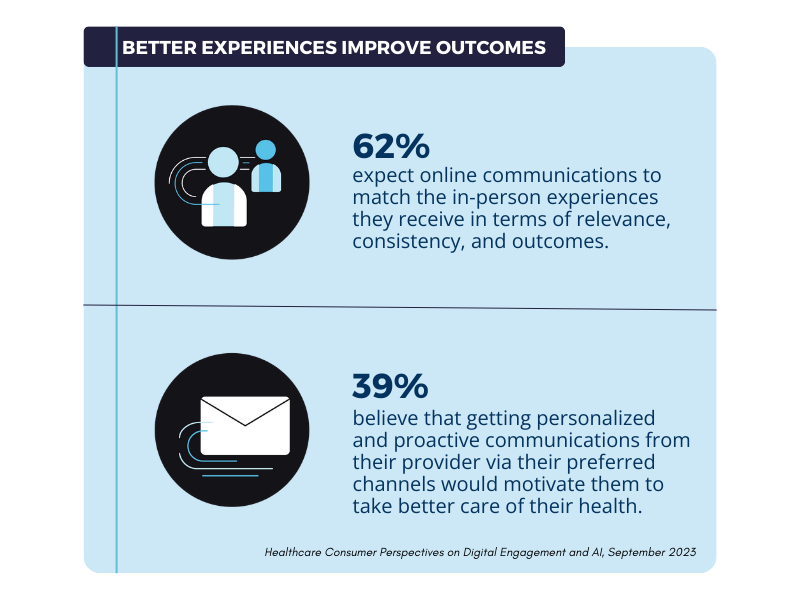
The 2023 Healthcare Consumer Perspectives on Digital Engagement and AI report conducted by Dynata Research found that more patients are adopting digital tools to manage their health and want their providers to provide a consistent experience across all channels. To improve the patient experience, a personalized patient engagement strategy is necessary.

Personalized Patient Engagement Improves the Patient Experience

Healthcare organizations manage so much data that can be used to improve the patient experience. As audience segmentation and personalization techniques have become more common in other industries like e-commerce and personal care, consumers are starting to expect the same experiences from their healthcare providers.

For example, media streaming services make personalized recommendations for new shows based on what you have previously watched. People like these features because it helps them discover new content they may not know about. Likewise, patients are beginning to expect a similar personalized patient engagement experience from their healthcare provider. Suppose a patient wants to control their diabetes diagnosis and communicates with their provider about this at an appointment. Afterward, when they log into the patient portal or receive follow-up information, they expect to receive relevant information that aligns with that provider’s conversation.

survey data patient preferences

Proactive, personalized patient engagement can also drive patients to make the right choices in managing their health. By sending patients the correct information at the right time in the context of their individual health journey, it is easier for them to manage their own health.

Shifting Preferences for Digital Tools Enable Personalized Patient Engagement

As more people are open to incorporating digital tools into their healthcare journeys, it has revealed new patient engagement opportunities. Several reasons led healthcare organizations to embrace digital tools. The coronavirus pandemic kicked off a necessary wave of digital transformation because of the rapid transmission of the disease through close contact. The desire to use these tools has remained strong even after institutions largely reopened in 2021. Patients have also shown no desire to go back to the way things used to be. Digital channels and tools like patient portals, email, medical devices, and mobile applications all make it easier for patients to manage their health on the go.

shifting digital preferences survey data

As patient preferences have shifted to embrace digital channels and technologies, organizations that can implement digital-first personalized patient engagement strategies intelligently are more likely to have satisfied and healthier patients. However, healthcare organizations must strive to provide a consistent experience across both in-person and digital avenues. According to the survey, the number one reason consumers would consider changing their healthcare provider is “complex or confusing experiences.” Poorly implemented and executed patient engagement can negatively impact the patient experience and retention, so it’s essential to be thoughtful in your approach.

How to Personalize the Patient Experience

Traditionally, HIPAA compliance requirements have made it difficult for healthcare providers to utilize protected health information (PHI) in personalized patient engagement efforts. Using PHI in communications is vital to craft messaging relevant to the patient’s health journey. However, when transmitting and storing PHI, HIPAA regulations must be followed to protect patient privacy.

The first step to executing personalized patient engagement involves selecting the right tools. Many traditional digital engagement tools are not designed to meet these stringent encryption and security requirements. By selecting tools that meet HIPAA’s technical requirements (like LuxSci’s Secure Marketing and Secure High Volume Email) and properly training employees, healthcare teams can employ the same segmentation and personalization techniques to reach patients with relevant and consistent communications.

Conclusion

Personalizing patient engagement is one way to improve patient marketing and retention. Contact us today to learn more about improving the patient experience with secure email communications.

Get in touch

Find The Best Solution For Your Organization

Talk To An Expert & Get A Quote

A member of our staff will reach out to you

Get Your Free E-Book!

Discover E-Book & gain expert insights.

What you’ll learn:

Enter your email to download now!

We respect your privacy. No spam, ever.