LuxSci

Business Solutions

How Do You Know if Software is HIPAA Compliant?

How Do You Know if Software is HIPAA Compliant?

As in any industry, the healthcare sector is eager to embrace any new technology solution that increases productivity, enhances operational efficiency, and cuts costs. However, the rate at which healthcare companies – and their patients and customers – have had to adopt new software and digital tools has skyrocketed since the pandemic. And while a lot of this software is beneficial, a key question arises: is it HIPAA compliant? While an application may serve an organization’s needs – and may be eagerly embraced by patients – it also needs to have the right measures in place to safeguard protected health information (PHI) to determine if it is indeed HIPAA compliant.

Whether you’re a healthcare provider, software vendor, product team, or IT professional, understanding what makes software HIPAA compliant is essential for safeguarding patient data and insulating your organization from the consequences of falling afoul of HIPAA regulations. 

With this in mind, this post breaks down the key indicators of HIPAA compliant software, the technical requirements you should look for, and best practices for ensuring your software is HIPAA compliant.

What Does It Mean for Software to Be HIPAA-Compliant?

The Health Insurance Portability and Accountability Act (HIPAA)  sets national standards for safeguarding PHI, which includes any data related to a patient’s health, treatment, or payment details. In light of this, any applications and systems used to process, transmit, or store PHI must comply with the stringent privacy, security, and breach notification requirements set forth by HIPAA.

Subsequently, while healthcare organizations use a wide variety of software, most of it is likely to be HIPAA-compliant. Alarmingly, many companies aren’t aware of which applications are HIPAA-compliant and, more importantly, if there’s a need for compliance in the first place.   

However, it’s important to note that HIPAA itself does not certify software. Instead, it’s up to software vendors to implement the necessary security and privacy measures to ensure HIPAA compliance. Subsequently, it’s up to healthcare providers, payers, and suppliers to do their due diligence and source HIPAA compliant software. 

How to Determine If Software Is HIPAA Compliant

So, now that we’ve covered why it’s vital that the applications and systems through which sensitive patient data flows must be HIPAA compliant, how do you determine if your software meets HIPAA requirements? To assess whether software is HIPAA compliant, look for these key indicators:

1. Business Associate Agreement (BAA)

A HIPAA compliant software provider must sign a Business Associate Agreement (BAA) with covered entities, i.e., the healthcare company. A BAA is a legal contract that outlines the vendor’s responsibility for safeguarding PHI. If a software provider doesn’t offer a BAA, their software is NOT HIPAA compliant.

Now, if a vendor offers a BAA, it should be presented front and center in their benefits, terms or conditions, if not on their website homepage as part of their key features. If a vendor has taken the time and effort to make their infrastructure robust enough to meet HIPAA regulations, they’ll want to make it known to reassure healthcare organizations of their suitability to their particular needs.  

2. End-to-End Encryption

A key requirement of the HIPAA Security Rule is that sensitive patient data is encrypted end to end during its transmission. This means being encrypted during transit, i.e., when sent in an email or entered into a form, and at rest, i.e., within the data store in which it resides.

In light of this, any software that handles PHI should use strong encryption standards, such as:

  • Transport Layer Security (TLS – 1.2 or above): for secure transmission of PHI in email and text communications. 
  • AES (Advanced Encryption Standard) 256: the preferred encryption method for data storage as per HIPAA security standards, due to its strength.

3. Access Controls and User Authentication

One of the key threats to the privacy of patient data is access by unauthorized parties. This could be from employees within the organization who aren’t supposed to have access to PHI. In some, or even many, cases, this may come down to lax and overly generous access policies. However, this can result in the accidental compromise of PHI, affecting both a patient’s right to privacy and, in the event patient data is unavailable, operational capability. 

Alternatively, the exposure of PHI can be intentional. One on hand, it may be from employees working on behalf of other organizations, i.e., disgruntled employees about to jump ship to a competitor. More commonly, unauthorized access to patient data is perpetrated by malicious actors impersonating healthcare personnel. To prevent the unintended exposure of PHI, HIPAA compliant infrastructure, software and applications must support access control policies, such as:

  • Role-based access control (RBAC): the restriction of access to PHI based on their job responsibility in handling PHI, i.e.., an employee in billing or patient outreach. A healthcare organization’s security teams can configure access rights based on an employee’s need to handle patient data in line with their role in the company. 
  • Multi-factor authentication (MFA): this adds an extra layer of security beyond user names and passwords. This could include a one-time password (OTP) sent via email, text, or a physical security token. MFA is very diverse and can be scaled up to reflect a healthcare organization’s security posture. This could include also biometrics, such as retina and fingerprint scans, as well as voice verification.
  • Zero-trust security: a rapidly emerging security paradigm in which users are consistently verified, as per the resources they attempt to access. This prevents session hijacking, in which a user’s identity is trusted upon an initial login and verification. Instead, zero trust continually verifies a user’s identity.  
  • Robust password policies: another simple, but no less fundamental, component of user authentication is a company’s password policy. While conventional password policies emphasize complexity, i.e., different cases, numbers, and special characters, newer password policies, in contrast, emphasize password length. 

4. Audit Logs & Monitoring

A key HIPAA requirement is that healthcare organizations consistently track and monitor employee access to patient data. It’s not enough that access to PHI is restricted. Healthcare organizations must maintain visibility over how patient data is being accessed, transferred, and acted upon (copied, altered, deleted). This is especially important in the event of a security event when it’s imperative to pinpoint the source of a breach and contain its spread.

In light of this, HIPAA compliant software must:

  • Maintain detailed audit logs of all employee interactions with PHI.
  • Provide real-time monitoring and alerts for suspicious activity.
  • Support log retention for at least six years, as per HIPAA’s compliance requirements.

5. Automatic Data Backup & Disaster Recovery

Data loss protection (DLP) is an essential HIPAA requirement that requires organizations to protect PHI from loss, corruption, or disasters. With this in mind, a HIPAA-compliant software solution should provide:

  • Automated encrypted backups: real-time data backups, to ensure the most up-to-date PHI is retained in the event of a security breach.
  • Comprehensive disaster recovery plans: to rapidly restore data in case of cyber attack, power outage, or similar event that compromises data access.  
  • Geographically redundant storage: a physical safeguard that sees PHI. stored on separate servers in different locations, far apart from each other. So, if one server goes down or is physically compromised (fire, flood, power outage, etc.,) patient data can still be accessed. 

6. Secure Messaging and Communication Controls

For software that involves email, messaging, or telehealth, i.e., phone or video-based interactions, in particular, HIPAA regulations require:

  • End-to-end encryption: for all communications, as detailed above.
  • Access restrictions: policies that only enable those with the appropriate privileges to view communications containing patient data.
  • Controls for message expiration: automatically deleting messages after a prescribed time to mitigate the risk of unauthorized access.
  • Audit logs: to monitor the inclusion or use of patient data.

7. HIPAA Training & Policies

Even the most secure software can be compromised if its users aren’t sufficiently trained on how to use it. More specifically, the risk of a security breach is amplified if employees don’t know how to identify suspicious behavior and who to report it to if an event occurs. With this in mind, it’s prudent to look for software vendors that:

  • Offer HIPAA compliance and cyber safety awareness training for users.
  • Implement administrative safeguards, such as usage policy enforcement and monitoring.
  • Support customizable security policies to align with your organization’s compliance needs.

Shadow IT and HIPAA Compliance

Shadow IT is an instance of an application or system being installed and used within a healthcare organization’s network without an IT team’s approval. Despite its name, shadow IT is not as insidious as it sounds: it’s simply a case of employees unwittingly installing applications they feel will help them with their work. The implications, however, are that:

  1. IT teams are unaware of said application, and how data flows through it, so they can’t secure any PHI entered into it.
  2. The application may have known vulnerabilities that are exploitable by malicious actors. This is all the more prevalent with free and/or open-source software.

While discussing the issue of shadow IT in general, it’s wise to discuss the concept of “shadow AI” – the unauthorized use of artificial intelligence (AI) solutions within an organization without its IT department’s knowledge or approval. 

It’s easily done: AI applications are all the rage and employees are keen to reap the productivity and efficiency gains offered by the rapidly growing numbers of AI tools. Unfortunately, they fail to stop and consider the data security risks present in AI applications. Worse, with AI technology still in its relative infancy, researchers, vendors, and other industry stakeholders have yet to develop a unified framework for securing AI systems, especially in healthcare. 

Consequently, the risks of entering patient data into an AI system – particularly one that’s not been approved by IT – are considerable. The privacy policies of many widely-used AI applications, such as ChatGPT, state the data entered into the application, during the course of engaging with the platform, can be used in the training of future AI models. In other words, there’s no telling where patient data could end up – and how and where it could be exposed. 

The key takeaway here is that entering PHI into shadow IT and AI applications can pose significant risks to the security of patient data, and employees should only use solutions vetted, deployed, and monitored by their IT department. 

Best Practices for Choosing HIPAA Compliant Software

Now that you have a better understanding of how to evaluate software regarding HIPAA compliance, here are some best practices to keep in mind when selecting applications to facilitate your patient engagement efforts:

Look for a BAA: quite simply, having a BAA in place is an essential requirement of HIPAA-compliant software. So, if the vendor doesn’t offer one, move on.

Verify encryption standards: ensure the software encrypts PHI both at rest and in transit.

Test access controls: choose HIPAA-compliant software that allows you to restrict access to PHI based on an employee’s role within the organization. 

Review audit logging capabilities: HIPAA compliant software should track every PHI interaction. This also greatly assists in incident detection and reporting (IDR), as it enables security teams to pinpoint and contain cyber threats should they arise.

Ensure compliance support: knowing the complexities of navigating HIPAA regulations, a reputable software vendor should provide comprehensive documentation on configuring their solution to match the client’s security needs. Better yet, they should provide the option of cyber threat awareness and HIPAA compliance training services. 

Create a List of Software Vendors: combining the above factors, it’s prudent for healthcare organizations to compile a list of HIPAA compliant software vendors that possess the features and capabilities to adequately safeguard PHI.

Choosing HIPAA Compliant Software

Matching the right software to a company’s distinctive workflows and evolving needs is challenging enough. However, for healthcare companies, ensuring the infrastructure and applications within their IT ecosystem also meet HIPAA compliance standards requires another layer of, often complicated, due diligence. 

Failure to deploy a digital solution that satisfies the technical, administrative, and physical security measures required in a HIPAA compliant solution exposes your organization to the risk of suffering the repercussions of non-compliance. 

If select and deploy the appropriate HIPAA compliant software, in contrast, your options for patient and customer engagement are increased, and you’ll be able to include PHI in your communications to improve patient engagement and drive better health outcomes. Schedule a consultation with one of our experts at LuxSci to discuss whether the software in your IT ecosystem meets HIPAA regulations. and how we can assist you in ensuring your organization is communicating with patient and customers in a HIPAA compliant way.

LuxSci HIPAA Compliant Forms

What is a HIPAA Compliant Form?

In healthcare today, patient data is one of the most valuable assets that any provider, payer or supplier can possess. As well as being highly valuable, however, the nature of patient data also makes it highly sensitive. That’s where HIPAA compliant forms come in. A HIPAA compliant form refers to any document or electronic form used to collect, access, or store protected health information (PHI), while also meeting the privacy and security requirements outlined by the Health Insurance Portability and Accountability Act (HIPAA). HIPAA is designed to safeguard patient data and protect health information (PHI) from unauthorized access, disclosure, and use.

With the rise of digital interactions in the healthcare industry, one of the best ways to capture and manage sensitive data is through secure forms. Whether onboarding new patients, scheduling appointments, gathering patient feedback, conducting surveys, or carrying out marketing campaigns, securely collecting patient information and business intelligence via HIPAA compliant forms can provide huge opportunities for improved efficiency and a better overall patient or customer experience.

In this article, we’ll explore the essential role secure forms play in collecting patient data, why healthcare companies should use HIPAA compliant forms to capture PHI, and subsequently, how to create secure and compliant forms for use in your everyday healthcare operations.

Why HIPAA Compliant Forms are Crucial for Healthcare?

A secure form (or secure web form) is a type of online form designed to collect, transmit, and store data and business intelligence, while maintaining strict security standards, including compliance with HIPAA regulations. Secure forms typically incorporate encryption and authentication protocols to ensure data is protected from unauthorized access during submission and storage.

In the context of healthcare, secure forms are specifically designed to capture PHI, which includes a patient’s name, address, medical history, diagnoses, treatment plans and other personal details related to their health.

Healthcare organizations, such as hospitals, doctors’ offices, clinics, in-home care services, retail healthcare, testing services and laboratories, health plan administrators, insurers, and medical equipment providers all deal with patient data on a daily basis. The sensitive and important nature of this data makes it a prime target for cybercriminals, who seek to use it for financial gain or other malicious purposes, including disrupting critical infrastructure and business operations, identity theft, and more.

Accounting for this, when scheduling appointments, onboarding new patients, or conducting surveys, for example, healthcare companies must use secure forms that adhere to HIPAA guidelines to ensure patient data is properly secured.

These include:

  • Data is encrypted in transit, when being collected from the form and transferred to storage, and at rest, where the patient data will reside, i.e. in a database.
  • Only authorized users, i.e., employees with good reason to handle PHI, have access to patient data.
  • Authorized users are also properly authenticated, to ensure they are who they claim to be, i.e., credentials haven’t been stolen, a session hasn’t been hijacked, etc.

Conversely, using unsecured forms to collect PHI could result in the data being compromised in a breach—and your organization suffering the associated consequences. As well as the financial penalties of a security breach, such as fines and compensation paid to the affected parties, more significantly, you’ll incur a dent in your reputation of your business and a loss of patient trust. 

Key Applications for Secure Forms in Healthcare

Now that we’ve covered why HIPAA compliant forms are vital for healthcare organizations, let’s look at some of the most effective ways they can be utilized.

1. New Patient Onboarding and Registration

Gathering basic information, such as their medical history, insurance details, and personal information, is a fundamental part of onboarding new patients. Secure forms allow patients to submit their sensitive data through a safe, encrypted platform, mitigating the risk of data exposure considerably and reducing or eliminating the need for human intervention in the process.

Additionally, automated form submissions, using data from electronic health record (EHR) systems and other integrated tools save time for healthcare providers and patients, offering a streamlined registration experience and improved workflows.

2. Appointment Scheduling

Secure forms offer an efficient way for patients to schedule their appointments, reducing time, effort, and administrative overhead by eliminating the need for a phone call or back-and-forth email conversation through automated scheduling. When integrated properly, the completion of a secure form can trigger appointment confirmation and reminder emails to reduce missed appointments. Allowing patients to book appointments in this way drastically reduces the amount of friction involved, making it far easier for patients to comply and making sure they don’t miss appointments. 

3. Patient and Customer Surveys

Feedback from patients plays a crucial role in improving healthcare services and experiences, allowing companies to pinpoint areas for refinement. Requesting feedback is also highly beneficial for a company’s long-term relationship with a patient or customers, as it demonstrates they value their opinion and want to incorporate it into their ongoing commitment to excellent service and efficient healthcare journeys; this makes patients more inclined to trust them, strengthening their connection and overall engagement.

Whether for patient satisfaction surveys or follow-up care assessments, secure forms offer a compliant means of collecting valuable feedback without jeopardizing PHI.

4. Email Communications and Marketing Campaigns

Email marketing in healthcare can be a tricky endeavor, especially when it comes to getting patients to opt-in and for classifying and handling PHI.

By using secure forms, healthcare organizations can gather consent from patients for email communications and marketing campaigns. Secure forms ensure that any sensitive patient data (i.e., preferences for specific treatments or communications) is submitted safely and stored in compliance with privacy regulations.

End-to-End Security for Form Data

An essential requirement of secure forms used by healthcare providers, payers, and suppliers is that they provide end-to-end security, i.e., protecting form data throughout its entire lifecycle—from submission to storage to access. Here are the measures required to ensure end-to-end security for PHI captured by web forms.

1. Secure Transmission

As alluded to earlier, when a patient submits data through a form, it must be encrypted while being transmitted from the form, i.e., the place of capture, to where it will be stored. Using Secure Socket Layer (SSL) or Transport Layer Security (TLS) encryption ensures that sensitive data, such as PHI, is protected from interception by malicious actors.

2. Secure Storage

Similarly, after submission, form data must be stored securely in an encrypted database to ensure HIPAA compliance. Subsequently, in the event the database is breached and the PHI exfiltrated, it will be undecipherable to cybercriminals, protecting the data from exposure.

3. Access Control and User Authentication

Organizations must ensure that only authorized personnel can access sensitive patient data, according to their responsibilities regarding PHI. In addition to this, healthcare organizations must implement strong authentication mechanisms, such as multi-factor authentication (MFA) and robust password practices, to facilitate user authentication. These mitigation measures are interconnected as they help better secure data even if a hacker gets their hands on an authorized employee’s login details.

4. Audit Logs

Additionally, companies must maintain audit, or activity, logs to carefully track who accessed PHI, when, where they accessed it from, and why, i.e., how they acted upon the data. This helps identify suspicious or malicious behavior and, in the event of a breach, pinpoint its origin and contain its spread. Audit logs can also reveal which employees have too many access privileges, enabling healthcare organizations to tighten up their access control policies.

Best Practices for Creating Secure Forms

Finally, here are some best practices to align with when employing the use of secure forms to collect patient data.

1. Use a Secure Form Builder

Choose a solution, such as LuxSci, that specializes in secure, HIPAA compliant forms. This ensures that all data collection, transmission, and storage are adequately encrypted and that compliance standards are met.

2. Enable Encryption

Always use encryption protocols, such as SSL or TLS, to protect data in transit, as well as encrypted databases, to store data. This ensures that data, especially sensitive PHI, remains encrypted according to HIPAA regulations.

3. Implement Role-Based Access

Ensure that access to sensitive data collected from forms is restricted based on roles within your organization. Only those who need the data to perform their jobs should have access, i.e., role-based access control (RBAC).

4. Keep Forms Simple

Avoid overwhelming patients and customers with too many fields or questions and focus on collecting the essential data necessary for the task at hand. This increases the likelihood the form will be filled out correctly and you’ll capture all necessary PHI.

5. Test Your Forms

Regularly test your forms for user experience, security vulnerabilities and functionality issues. Vulnerabilities in your forms could lead to data breaches or compliance violations, so regularly probing your forms for weaknesses, and acquiring up-to-date data intelligence to discover emerging threats, ensures they remain secure.

Why LuxSci’s Secure Forms Stand Out

LuxSci offers a fully HIPAA compliant Secure Forms solution, designed specifically with the security needs of healthcare organizations in mind. This includes:

  • End-to-End Security: Data is protected through advanced encryption protocols during transmission and storage, ensuring patient data remains confidential.
  • Customization: Forms can be easily created and customized to collect a wide range of patient and customer information, including PHI, appointment details, feedback, and consent for communications.
  • Seamless Integration: The LuxSci Secure Forms solution integrates with existing healthcare systems that store PHI to enable streamlined workflows and centralized data management.
  • Audit Trails: LuxSci provides comprehensive audit logging to track every action taken on the data, offering accountability and transparency in accordance with HIPPA guidelines.

Want to learn more about how LuxSci’s Secure Forms will help you achieve HIPAA-compliant patient data collection? Contact us today to talk with our expert team.

 HIPAA Compliant Forms FAQs

1. What is the difference between a secure form and a regular form?

A secure form uses encryption and security protocols to ensure that data is protected during transmission and storage. Regular forms don’t necessarily offer these risk mitigation measures, making them far more vulnerable to data breaches, especially in healthcare.

2. Is LuxSci’s Secure Forms solution HIPAA-compliant?

Yes, LuxSci’s Secure Forms are fully HIPAA-compliant, ensuring the privacy and security of Protected Health Information (PHI).

3. How does encryption work in secure forms?

Encryption transforms data into unreadable code during transmission and at rest, so only authorized recipients with the decryption key can access the original data, ensuring that sensitive information remains confidential—even in the event of a breach.

4. Can secure forms be integrated with other healthcare systems?

Yes, LuxSci Secure Forms integrate seamlessly with other healthcare systems, platforms and applications, including customer data platforms (CDPs), electronic health records (EHR) systems, and revenue cycle management (RCM) platforms, making it easier to manage collected data—and, better still, keep it secured.

5. Why is end-to-end security important for healthcare forms?

End-to-end security ensures that patient data remains protected throughout the entire process—from submission to storage to subsequent access. This reduces the risk of data breaches and ensures HIPAA compliance.

Effective HIPAA Compliant Email Campaigns: A Step-By-Step Guide

In the healthcare industry, ensuring HIPAA compliance is essential when carrying out email campaigns that contain protected health information (PHI), including for both transactional and marketing emails. Whether sending appointment reminders, treatment plans, payment information, or marketing campaigns, HIPAA-compliant email services are essential for securely engaging with patients and effectively leveraging PHI in your messages.

However, a constant challenge faced by healthcare companies is carrying out email campaigns that are both effective and HIPAA compliant. On one hand, some organizations fail to recognize when they’re including PHI in their messaging and fall out of compliance. On the other hand, while companies are compliant in their handling of PHI, their email campaigns fail to use this information to personalize communications and deliver better outcomes as a result.

With all this in mind, this step-by-step guide will walk you through how to run effective HIPAA-compliant email campaigns that combine security and personalization for enhanced patient engagement.

Step 1: Choose a HIPAA-Compliant Email Service Provider

The first, and undoubtedly, most important step to running successful HIPAA-compliant email campaigns is using a secure and reliable delivery service. To ensure compliance with HIPAA’s privacy and security rules, your chosen platform must offer end-to-end encryption, secure data storage, and other key cybersecurity measures. Additionally, a comprehensive email delivery service will provide the tools and features you need, such as design and segmentation functionality, to optimize the effectiveness of your healthcare engagement campaigns.

Perhaps the most significant benefit of running campaigns through a HIPAA-compliant email provider is that it removes all the guesswork from what counts as PHI in the first place; you can feel fully assured that all your emails are both secure and in line with HIPAA regulations.

A Closer Look: How LuxSci SecureLine™ Ensures HIPAA Compliant Email

Step 2: Ensure You Have a Business Associate Agreement (BAA)

A key determiner of a truly HIPAA-compliant email platform, like Luxsci, is being willing to provide you with a Business Associate Agreement (BAA). A BAA is a crucial aspect of HIPAA compliance, as it lays out, in writing, that each party acknowledges their responsibility to protect PHI and, subsequently, their respective liability in the event of a data breach.

With this in mind, a key part of your due diligence when choosing an email delivery platform is ensuring it is willing to supply you with a BAA. Many organizations are surprised to find that many popular delivery solutions, such as Mailchimp and SendGrid do not sign BAAs and, as a result, aren’t HIPAA-compliant email services.

Step 3: Secure Patient Consent & Opt-In Best Practices

Before sending emails that potentially contain PHI, it’s essential to secure patient consent: they must explicitly agree to receive information via email. Obtaining patient consent shows that your organization respects the patient’s right to privacy and grants them greater control over how their data is used – something that people are growing increasingly conscious of. This is particularly important for marketing campaigns, benefits communications, and proactive notifications like medical equipment upgrades or prescription verifications.

By following opt-in best practices, you’ll not only ensure HIPAA- compliance but also build trust with your patients, making them more receptive to your healthcare engagement efforts.

A Closer Look: Best Practices for Email Marketing in Healthcare

Step 4: Segment Your Campaigns for Better Engagement

Now you’ve signed up for a HIPAA-compliant email services provider and have secured patient consent, it’s time to segment your audience. Segmentation and personalization ensure that patients only receive the communications most relevant to them, improving the effectiveness of your campaigns.

For instance, you could create email campaigns for:

  • Appointment reminders: for upcoming check-ups or follow-ups.
  • Billing and payment: notifications that include secure links for payment.
  • Proactive notifications: about prescription renewals or in-home care.
  • Marketing: proactive offers, equipment upgrades, new services and more.

In pursuit of this, LuxSci Secure Marketing enables you to safely create and manage different patient segments, ensuring that emails containing PHI reach the appropriate audience, in addition to being sent securely.

A Closer Look: Learn about LuxSci’s secure HIPAA compliant marketing solution

Step 5: Automate for Efficiency and Accuracy

Automation is a vital tool for scaling your HIPAA-compliant email campaigns. As the number of messages you send out starts to grow, automating as much of the process as possible will save you considerable time and effort.

Whether you’re sending appointment reminders, treatment plan updates, or marketing emails, automation reduces human error and ensures timely delivery. This not only saves time but ensures consistent, efficient communication with your patients.

A Closer Look: Increasing Operational Efficiency with Email Automation

Step 6: Use Advanced Encryption for PHI

With PHI being a core component of many healthcare communications, you must ensure that every email you deliver is encrypted. HIPAA regulations require emails to be encrypted at rest, including when stored, and in transit, and when being sent to patients, so the sensitive data isn’t readable by a hacker if it is stolen.

While not a standard feature in all email delivery services, LuxSci’s SecureLine technology provides flexible encryption options such as TLS and Escrow, applying the right level of encryption based on the email’s content and the recipient’s security posture.

Step 7: Monitor and Report for Continuous Improvement

Lastly, it’s important to note that maintaining HIPAA compliance isn’t a one-time obligation. Continuous monitoring and reporting are crucial for identifying potential security flaws, compliance issues, and improving the effectiveness of your email campaigns.

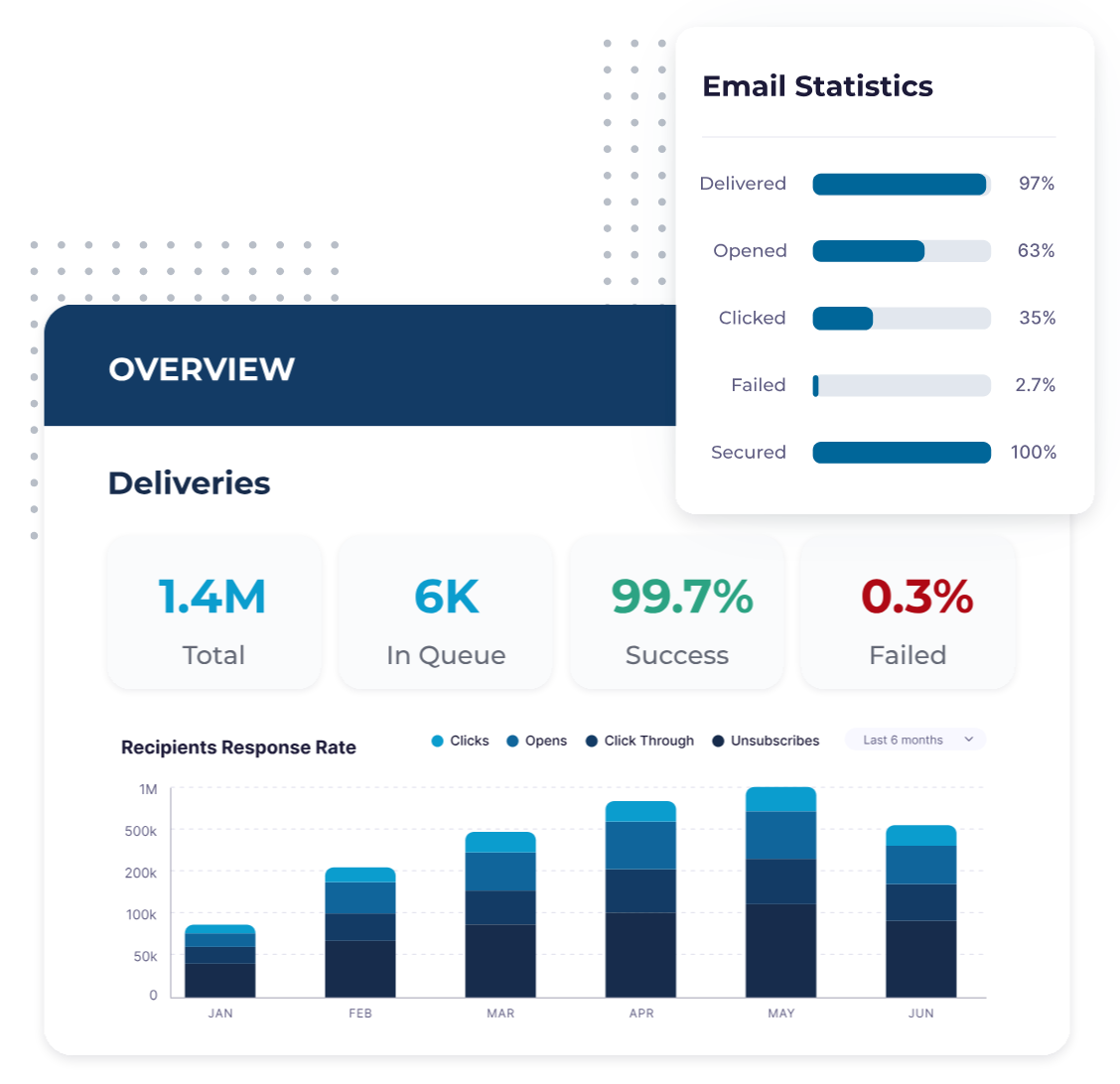
This is particularly important for large-scale campaigns, such as lead generation for retail healthcare products or services, and order confirmations. Comprehensive reporting tools allow you to track email deliverability, open rates and response rates, recipient domain performance, and other key performance metrics, all while ensuring that your PHI is handled compliantly.

A Closer Look: New LuxSci Reporting Goes Deeper on Email Statistics, Trends & Analysis

HIPAA-Compliant Email is Critical for Healthcare Marketing Campaigns

Running a successful HIPAA-compliant email campaign is all about balancing security with data-driven marketing strategies. By following the steps detailed in this article, you’ll get increasingly more from your healthcare engagement efforts: building stronger connections with patients and, ultimately, maximizing the ROI of your marketing spend.

As the most experienced HIPAA-compliant email provider, LuxSci specializes in providing high performance, secure solutions that ensure your messages comply with all HIPAA regulations – no matter the scale of your campaign, or the use case.

If you’d like to learn more about how LuxSci can help your organization achieve its healthcare marketing goals, contact us today!


LuxSci HITRUST Certified

LuxSci Achieves HITRUST Certification for Third Consecutive Term

We’re thrilled to announce our latest data security achievements here at LuxSci! Once again, LuxSci has achieved HITRUST CSF® certification, following a multi-step process that includes a deep assessment, validation, and quality assurance analysis for a company and its products. Our 2024-26 certification marks the third consecutive time that LuxSci has received the 2-year HITRUST certification, meeting the rigorous standards set by the HITRUST CSF framework.

In related news, LuxSci, which is GDPR compliant, has also renewed its US-EU Data Privacy Framework (DPF) certification for the next 12 months. According to the certification, U.S. companies that participate in the DPF provide adequate levels of security for personal data transfers received from the EU within the scope of the EU General Data Protection Regulation (GDPR). This renewal enables us to support customers in Europe, while ensuring we meet the highest data protection standards for cross-border data transfers. For customers that do business in the EU and UK, LuxSci ensures data privacy is upheld in compliance with regulations.

Our latest security certifications are a testament to our continuous and unrelenting commitment to delivering the highest levels of data protection for healthcare communications. This includes securing email, marketing, text, forms and hosting—while also improving patient engagement and outcomes with the use of protected health information (PHI) in communications.

Why HITRUST Certification Matters in Healthcare

In the healthcare industry, protecting sensitive patient data is not just a legal requirement—it’s an ethical responsibility and an imperative for any company or organization in existence today. While HIPAA compliance establishes a strong baseline for safeguarding patient information, HITRUST certification takes data protection a step further. The HITRUST Common Security Framework (CSF) integrates multiple regulatory standards, including HIPAA, to provide a comprehensive approach to information security, privacy, and risk management.

For healthcare organizations—and larger companies and enterprises, in particular—partnering with a HITRUST-certified provider like LuxSci provides peace of mind. You can trust that our security controls not only meet HIPAA standards but also go beyond them to address the latest industry challenges and emerging threats—we do this constantly, year after year.

How HITRUST Enhances Data Security Beyond HIPAA

HIPAA establishes the essential requirements for securing protected health information (PHI), putting a solid, but basic foundation in place. HITRUST certification is recognized for going beyond the basics. Here’s how:

  • Comprehensive Approach to Risk Management: HITRUST CSF combines various security, privacy, and regulatory standards such as NIST, ISO, and PCI-DSS, providing a more robust framework for managing risks in healthcare.
  • Continuous Monitoring and Improvement: HITRUST requires organizations to continuously monitor and improve their security measures, ensuring that their defenses evolve alongside new threats and new technologies.
  • Tailored Security Controls: HITRUST’s framework scales based on the size, complexity, and nature of the organization, offering flexibility while maintaining a high standard of security.
  • Third-Party Validation: Achieving HITRUST certification involves rigorous third-party audits, which demonstrate that an organization’s security practices are not only in place but have been thoroughly validated.

The Benefits of HITRUST Certification for Healthcare

For healthcare providers, payers, and suppliers, the advantages of partnering with a HITRUST-certified organization like LuxSci are clear:

  • Streamlined Compliance: HITRUST certification simplifies compliance with multiple regulatory frameworks, reducing the burden of managing multiple audits and certifications.
  • Enhanced Patient and Customer Trust: By choosing a HITRUST-certified partner, you show patients, partners, and regulators that your organization prioritizes the highest levels of security.
  • Future-Proofing: HITRUST ensures that you’re not just up to date with today’s standards but prepared for future regulatory requirements and security challenges as they arise.

At LuxSci, we remain committed to delivering secure, scalable, and flexible HIPAA-compliant healthcare communications solutions that our clients can depend on for the highest levels of data protection.

If you’d like to learn more about LuxSci’s secure healthcare communications solutions—and how we elevate your healthcare data protection to the next level—contact us today!

LuxSci Email Tracking Features

New Email Tracking Features Deliver More Accurate Engagement Insights

Today, we’re excited to announce two new reporting features designed to help healthcare organizations improve reporting accuracy and the overall effectiveness of their email campaigns. The new features offer deeper insights into Apple Mail and Google email performance by distinguishing between opens and clicks performed by human actions and automated events — and by giving users control over how these events are reflected in LuxSci email campaign reporting.

Let’s dive into what these features are and how they can help you get more precise data from your healthcare email marketing and communications efforts.

Feature 1: Enhanced Open and Click Tracking – Human vs. Automated

One of the biggest challenges in email tracking today is the rise of automated systems that pre-load images and scan links in emails. Automated systems can trigger open or click events without the recipient actually interacting with the email, leading to inflated and misleading open/click rates.

With LuxSci’s new enhanced open and click tracking, you can now tell whether Apple Mail and Google emails (Gmail and Google Workspace) were opened or a link was clicked by a human or by an automated system. This crucial distinction allows you to have a much clearer picture of actual user engagement.

Here’s how it works:

  • When emails are sent with open tracking enabled, a small tracking image (also known as a pixel) is embedded in the email. When that image is loaded, the system tracks the email as “opened.”
  • Similarly, links in the email are encoded to track clicks. If a recipient clicks a link, it triggers a “clicked” event, but these events can also be triggered by automated systems.
  • LuxSci’s enhanced open and click tracking feature analyzes these events and reports whether the actions were performed by a human or an automated system, helping you sift through false positives.

Feature 2: Suppressing Automated Events in Your Reporting

In addition to tracking the source of open and click events, LuxSci’s second new feature gives you the option to exclude automated events from Apple Mail and Google email from your email engagement statistics altogether. This setting, available in account-wide outbound email settings, is a powerful tool for ensuring the accuracy of your reports and understanding true user engagement.

Here’s how it works:

  • Automated opens and clicks can be removed from email reporting for better accuracy. For example, if a security bot clicks a link, that event will be logged, but it won’t mark the email as “clicked” in your statistics.
  • Your open, click, and click-through rates can be set to only reflect real human actions, making these metrics much more reliable for evaluating campaign performance and actual patient engagement.

Why These Features Matter for Healthcare Email Marketing

For healthcare organizations, reliable metrics are essential. Emails often carry critical information related to patient care, transactions, or marketing, and understanding who is engaging with your content is critical to ongoing improvement and long-term success. At the same time, automated actions can inflate your open and click rates, leading to inaccurate conclusions about your email performance.

LuxSci’s new features give you the power to:

  • Track email engagement with precision: Know the difference between human engagement and automated actions, so your metrics reflect reality.
  • Customize your reporting: Decide whether you want to include or suppress automated events in your reports.
  • Improve deliverability strategies: By analyzing which emails are genuinely opened or clicked by real people, you can fine-tune your email campaigns to maximize their effectiveness.

Ready to Enhance Your Email Tracking?

Take control of your email deliverability insights with LuxSci’s newest email tracking tools. Whether you want to gain deeper insights into recipient behavior or eliminate noise from automated systems, these features are designed to help you improve your email reporting, performance and engagement.

For current LuxSci customers, you can learn more about these features in the Support Library, under Support, when you are logged into your account.

If you’re new to LuxSci, reach out today and we’d be happy show you the power of our secure, HIPAA-complaint healthcare communications solutions, including high volume email, text, forms and marketing solutions. Contact us here.

Mailchimp HIPAA compliant

Is Mailchimp HIPAA Compliant?

The question “Is Mailchimp HIPAA-compliant?” has echoed across healthcare companies and organizations countless times. Whenever they explore their options for email automation and marketing software, the popular provider’s name tends to be one of the first to pop up.

Offering an integrated email marketing solution that enables businesses to streamline how they connect with their customers, Mailchimp has long been the go-to option for companies looking to improve their engagement efforts.

With healthcare organizations using the platform to distribute emails, send newsletters, share content on their social channels, track their results and more, it’s only natural that these companies are also wondering whether Mailchimp HIPAA-compliant bulk email is possible.

IS MAILCHIMP HIPAA COMPLIANT?

Unfortunately, the answer will disappoint many in the healthcare sector, as well as other businesses and companies that deal with electronic protected health information (ePHI): Mailchimp is not HIPAA-compliant.

Despite this, however, the platform does have some promising security features and policies that make it seem as though Mailchimp could be a HIPAA-compliant marketing email option, including:

Now, while these security features are certainly encouraging, there is a significant omission that prevents Mailchimp from being a HIPAA-compliant email provider.

MAILCHIMP: NO BUSINESS ASSOCIATE AGREEMENT 

According to the HIPAA Privacy Rule, “A business associate is a person or organization that performs certain functions or activities that involve the use or disclosure of protected health information (PHI) by a covered entity”.

In the context of a HIPAA-compliant email provider, Mailchimp would be the business associate and the healthcare organization would be the covered entity.

Subsequently, a business associate agreement (BAA) is a written contract between a covered entity and a business associate that is essential for HIPAA compliance. It details how two organizations can share data and under what circumstances. A BAA also delineates where the legal responsibilities of each party fall and who will be culpable if there are any problems.

BAAs are a critical part of HIPAA compliance and failure to have one is considered an immediate HIPAA violation. It doesn’t matter if all security best practices are being followed, and the ePHI is shared in a manner that’s compliant in every other way – sharing data without a BAA in place is still a violation.

If a company puts in the extra effort to provide a HIPAA-compliant service, it will generally advertise its compliance to attract more clients from the health sector. In the case of Mailchimp – there is hardly a mention of a BAA on its website.

Additionally, Section 21 of MailChimp’s Terms of Use states, “You’re responsible for determining whether the Service is suitable for you to use in light of your obligations under any regulations like HIPAA, GLBA … If you’re subject to regulations (like HIPAA) and you use the Service, then we won’t be liable if the Service doesn’t meet those requirements.”

In other words, in contrast to a BAA, Mailchimp is transparent and clear on squarely placing the responsibility of non-compliance on the healthcare organization – even mentioning HIPAA by name.

Besides the absence of a BAA, Mailchimp also does not make any provision for encrypting the bulk emails that would be sent out from its platform. This makes it unsuitable for sending HIPPA-compliant emails. On top of this, Mailchimp lacks many other security nuances, which wouldn’t be required unless you have to follow HIPAA or other compliance frameworks.

In conclusion, the only answer to “Is Mailchimp HIPAA-compliant?” is a resounding “No”.

MAILCHIMP HIPAA-COMPLIANT ALTERNATIVES

Fortunately, all is not lost for healthcare companies that need a HIPAA-compliant bulk email or high volume email solution, or other HIPAA-compliant marketing tools. While they may have to rule out popular options like Mailchimp, there are several HIPAA-compliant email services that are specifically designed for organizations that have to comply with the regulations.

As the most experienced HIPAA-compliant email provider, LuxSci specializes in providing secure and HIPAA-compliant services for companies aiming to send hundreds of thousands – or even millions – of emails to patients and customers. In light of this, we place security, regulatory and customer considerations front and center when delivering our solutions.

Our approach combines the most experience in HIPAA-compliant communications with a suite of secure solutions, including HIPAA-compliant high volume email and HIPAA-compliant email marketing. Our flexible encryption and multi-channel approach to secure healthcare communications enables healthcare companies to strike the right balance between security and regulatory concerns, and communicating with patients and customers over the channel of their choice for better outcomes.

Interested in discovering how LuxSci’s secure, HIPAA-compliant email, marketing, text and forms solutions can transform your healthcare engagement efforts?

Contact us to learn more about today!

LuxSci Secure Texting for Healthcare Apps

How Secure Texting for Healthcare Improves Patient Portals

Patient portals were once hailed as a game-changing tool for healthcare companies to engage patients throughout their healthcare journey. In theory, they offer a convenient platform where patients and customers can access their medical records, communicate with their providers or suppliers, book appointments, and even pay bills—safely and securely. But despite the optimism around patient portals, the reality is much more complex. Adoption rates remain stubbornly low, and many patients simply don’t like using them.

So, why is this the case? More importantly, how does the relatively mediocre adoption of patient portals impact patient engagement, outcomes, and overall cost?

In this post, we’ll take a closer look at the shortcomings of patient portals, share current trends in patient and customer communication preferences, and explore how text communication can improve portal adoption and patient engagement.

Why Patient Portals Aren’t Enough

At their core, patient portals are online platforms that provide access to a range of healthcare-related services. These services typically include:

  • Access to medical records
  • Secure messaging with healthcare providers
  • Appointment scheduling
  • Prescription refill requests
  • Bill payments

These portals were designed with good intentions, but as we’ll discuss, they often fall short of delivering the seamless, user-friendly experience that people expect today.

LuxSci Secure Texting for Healthcare Apps

Preferences for Healthcare Communications

Healthcare communication preferences have shifted. Today’s patients don’t just want portals—they want a range of communication options, from phone calls and emails to secure texts. According to a 2023 survey by Accenture, patients’ preferred communication channels include:

  • Phone Calls: 62% of patients still prefer phone conversations with their healthcare providers.
  • Email: 44% like receiving emails for lab results, appointment reminders, and other updates.
  • Text Messaging: 37% of patients prefer receiving healthcare communications via text, particularly for reminders and follow-ups.
  • Patient Portals: Only 28% of patients prefer using portals for routine interactions.

There are several reasons why people are reluctant to adopt patient portals, including:

  • Complexity: Many portals can be clunky, difficult to navigate, and not user-friendly. Patients and customers often find it difficult to log in, locate their information, or contact their provider or supplier through the portal.
  • Lack of Engagement: Patients are rarely encouraged to use these portals consistently, and some are unaware they even exist.
  • Concerns About Security: While patient portals are designed to be secure, many patients still harbor concerns about their personal health information being compromised.
  • Limited Access: Some portals only provide limited access to medical records, appointment scheduling, or other information, making them less useful.

Relying solely on patient portals leaves a significant portion of patients and customers under-served. By integrating secure texting apps into their engagement strategies, healthcare providers, payers and suppliers can diversify their communication methods and connect with patients and customers more effectively across the channels they prefer.

How Secure Texting Complements Patient Portals

Secure texting apps for healthcare solve many of the issues patient portals alone cannot. By offering an additional, patient-friendly communication channel, these apps improve patient engagement and streamline interactions.

Here’s how secure texting apps work:

  • Secure Access to Patient Portals: Secure texting apps allow patients to access ePHI and other sensitive information directly from mobile devices via regular SMS text messages.
  • Instant Notifications & Alerts: Patients and customers can click on a link in text messages and view information in a secure mobile web browser on their smartphones or tablets, including appointment reminders, updates, product upgrades and promotions.
  • User-friendly: Most secure texting apps are designed with usability in mind, offering an intuitive, seamless experience  – with no new applications required.

By offering secure texting as an additional communication channel, healthcare organizations can reach more patients and customers, and improve engagement by offering patients multiple channel options for communication and easier access to portals.

Security and HIPAA Compiance

It’s essential to note that not all texting apps are appropriate for healthcare use. Traditional text messaging services don’t offer the level of encryption and security required by HIPAA regulations, making them risky for exchanging protected health information (PHI).

LuxSci’s secure texting for healthcare ensures that patient and customer communications comply with HIPAA’s strict privacy and security standards. Our secure texting solution offers encryption, authentication, and data protection, ensuring that patients can directly and safely access portals for viewing health information, treatment plans, payments, promotions and more.

Benefits of Secure Texting for Healthcare

Adopting secure texting apps for healthcare, alongside other communication tools, including email and web forms, brings numerous benefits to both patients and providers, including:

  • Increased Engagement: Patients and customers are more likely to respond and engage with providers through their preferred communication method, not just a portal.
  • Improved Outcomes and Results: Engaged patients are more likely to adhere to their treatment plans, stay informed and use the right products, improving overall health outcomes.
  • Lower Costs and Greater Efficiency: Better communication leads to fewer missed appointments, more efficient processes and greater patient participation in their healthcare journeys.
  • Greater Satisfaction: Patients and customers appreciate having a choice in how they communicate with their providers and healthcare suppliers, leading to higher satisfaction, loyalty and trust.
  • Reduce Missed Appointments: Instant notifications and reminders via text can help patients stay on top of their appointments and follow-ups.

Secure Texting is Key to Modern Healthcare Communication

Patient portals alone are no longer enough to drive the kind of patient engagement needed for optimal healthcare outcomes. By integrating secure texting apps for healthcare with other communication tools like email and web forms, providers can offer a more patient-centric approach to healthcare communication.

At LuxSci, we’re committed to helping healthcare providers offer secure, HIPAA-compliant communication solutions that improve patient engagement, outcomes and results. By giving patients the flexibility to choose their preferred communication channel—whether it’s secure texting, email, phone, or a patient portal—you can increase engagement, improve outcomes, and lower costs.

Want to learn more about secure texting for healthcare? Reach out and connect with us today!

FAQs

  1. What are secure texting apps for healthcare? Secure texting apps for healthcare are HIPAA-compliant platforms that enable encrypted, secure communication between healthcare providers and patients via text message.
  2. Why are patient portals underutilized? Patient portals often have usability issues, complex login procedures, and limited functionality, making them less appealing to patients and customers.
  3. Is secure texting HIPAA-compliant? Yes, when done through solutions like LuxSci Secure Text, communications can be encrypted and meet HIPAA’s stringent security requirements.
LuxSci HIPAA compliant marketing tips

Top 10 Things You Need to Know About HIPAA Compliant Marketing

Is HIPAA holding you back? Today’s healthcare organizations stand to gain huge benefits from carrying out HIPAA compliant marketing campaigns. This includes improved patient and customer engagement, more leads, increased conversions, and better results for your business. However, fears about cybersecurity and compliance lapses too often derail healthcare marketing efforts before they ever reach their intended targets.

By implementing HIPAA compliant marketing, you can safely utilize Protected Health Information (PHI) to deliver highly targeted campaigns that not only engage patients and customers, but also grow your business. At LuxSci, we believe that compliance with HIPAA regulations doesn’t just keep you safe from penalties. Being HIPAA compliant means you’ve put in the proper safeguards to protect data and unlock the power of using PHI to better connect with your patients and customers. This allows you to build trust with your audience while realizing the full potential of personalized marketing engagement.

LuxSci HIPAA compliant marketing tips

Get HIPAA Compliant Marketing Right

At LuxSci, we’re leaders in secure healthcare communications, and we know how to leverage PHI safely within HIPAA guidelines to help healthcare organizations thrive. We’ve been doing it for more than 20 years, working with some of the biggest names in the healthcare industry, including Athenahealth, 1800 Contacts, Delta Dental and Rotech medical equipment.

If you’re considering marketing outreach and have questions around HIPAA compliance, here are the top 10 things you need to know before you get started:

1. Understand What Constitutes Protected Health Information (PHI)

PHI includes any personal and health information that can be used to identify a patient or customer, such as names, email addresses, medical conditions and treatment plans—virtually anything related to the health of an individual. When PHI is used in marketing, it falls under HIPAA regulations, requiring extra precautions and ultimately, compliance.

2. Obtain Explicit Patient and Customer Consent

Using PHI for marketing purposes requires explicit consent from the patient or customer. Without proper authorization, you risk violating HIPAA, which could lead to hefty fines and a loss of trust. It’s also important to know that even if you have consent to communicate with a customer or patient, HIPAA compliance requires a separate consent for marketing.

3. Ensure Secure Email Marketing

Marketing emails that involve PHI must be encrypted at all times, end-to-end. Secure email services like LuxSci’s HIPAA compliant marketing solution ensure that your emails are both effective and fully protected from potential data breaches, while helping drive better personalization and improved results.

4. Business Associate Agreements (BAAs) Are Non-Negotiable

If you use a third-party vendor or marketing service that handles PHI on your behalf, they must sign a Business Associate Agreement (BAA). This legally binds them to follow HIPAA regulations, helping you avoid penalties for third-party non-compliance.

5. Train Your Staff on HIPAA Compliance

All team members involved in marketing should be well-versed in HIPAA regulations to prevent accidental breaches of PHI. Regular training and communication help maintain the security of your campaigns.

6. Audit Your Marketing Tools for Compliance

Not all marketing tools are HIPAA-compliant by default. Ensure that your email platforms, text tools, forms, CRM, analytics tools, and other digital marketing solutions adhere to HIPAA compliance standards. There are many effective marketing solutions on the market today, but very few that enable full HIPAA compliant marketing. Make sure you know!

7. Do Not Use Targeted Ads with PHI – Ever!

Using PHI to create targeted ads is a violation of HIPAA regulations. Instead, focus on using de-identified data for marketing campaigns, or forgo targeted advertising altogether to stay safe. Targeted email campaigns are often a safer option and more suitable for personalization.

8. Use HIPAA-Compliant Website Forms

If your website collects patient information, make sure that all forms are encrypted and compliant with HIPAA standards. This protects patient data during the submission process, ensuring that information remains secure. Secure web forms can also accelerate and improve workflows, including medical equipment orders and upgrades, by safely collecting patient and customer data over digital channels.

9. Understand What Marketing Communications Are Exempt

Some communications, like appointment reminders and treatment follow-ups, don’t require explicit patient consent and are not considered marketing under HIPAA. Knowing the difference between what’s marketing and what’s care-related communication can save you from unnecessary complications.

10. Stay Updated on HIPAA Regulations

HIPAA regulations evolve over time. Keeping yourself and your team informed of changes ensures that your marketing remains compliant, protecting your organization from penalties and the reputation damage and loss of trust that can result from a breach.

At LuxSci, We’re Here to Help!

Adhering to HIPAA regulations doesn’t just keep you on the right side of compliance—it also empowers you to use PHI to create more targeted, more personalized marketing campaigns that drive higher engagement, more conversions, and ultimately, better business results. By mastering HIPAA compliant marketing, you can grow your business while safeguarding patient and customer data—all while maintaining trust and creating better connections with your targets.

Want to learn more?

Reach out today for a chat, DEMO or deeper dive into the best HIPAA compliant marketing solution for your business.


FAQs

  1. What is HIPAA compliant marketing?
    HIPAA compliant marketing refers to marketing efforts that meet HIPAA’s privacy and security standards when dealing with the protected health information (PHI) of patients and customers.
  2. Can I use PHI in email marketing?
    Yes, but only if the emails are encrypted in accordance with HIPAA compliance regulations, and you have obtained explicit patient consent to use their PHI for marketing purposes.
  3. What is a Business Associate Agreement (BAA), and do I need one?
    A BAA is a contract that ensures any third-party handling PHI follows HIPAA regulations. If you work with outside vendors or marketing agencies, a BAA is mandatory to be HIPAA compliant.
  4. What are the penalties for HIPAA violations in marketing?
    HIPAA violations can result in fines, legal action, and significant damage to your organization’s reputation, making compliance essential.


LuxSci Executive Appointments Sullebarger Du Lac

LuxSci Expands Executive Team to Scale Enterprise Growth and Operations

LuxSci, a leading provider of secure, HIPAA-compliant communications software, today announced new executive appointments as part of its strategy to drive future growth and further expansion into the enterprise market. Experienced B2B software executives Robert Sullebarger and Geneviève du Lac have joined the company as Head of Sales and Head of Finance, respectively – reporting to recently appointed CEO Mark Leonard. In addition, David Hillman has joined the company as Director of Engineering, reporting to Erik Kangas, Chief Technology Officer.

“LuxSci has proven its capabilities with some of the largest, most forward-looking companies in healthcare, including patient engagement platform, EHR systems, and payment providers, as well as healthcare retail and in-home care providers,” said Leonard. “Bob, Geneviève and David all bring deep leadership experience combined with a willingness to be hands-on in helping us optimize our operations and execute quickly for our customers and partners.”

Proven Sales Leader and Trusted Advisor

Bob’s career has focused on enterprise software sales and customer acquisition across both established and emerging technologies, including security & compliance, conversational AI and virtual assistant platforms, machine learning, and telecom & networking. Bob brings LuxSci more than two decades of experience in sales, marketing, and product management roles, serving as both a trusted business advisor and a technology expert for customers and partners. Most recently, he led the sales teams for AI solution providers ModuleQ and Interactions LLC, where he helped the company grow from $10 million to more than $100 million in annual revenue. He has also held leadership positions at contact center analytics provider CallMiner, and data security provider Vericept Corporation.

“LuxSci is the gold standard for HIPAA-compliant email and secure healthcare communications with a leadership position in the market,” said Sullebarger. “With healthcare portal adoption maxing out, we have a real opportunity to improve patient engagement and outcomes by opening up the email, SMS and marketing channels to bring more people into today’s healthcare conversation.” 

Experienced CFO and Finance Leader

Geneviève joins LuxSci with more than 15 years of experience in CFO and Finance leadership roles. This includes building world-class Finance teams and organizations in the cybersecurity, consumer, and services industries at companies including Cypress Security, Astro Gaming and Wine Country Connect. Throughout her career Geneviève has established a proven track record of success in Finance leadership for ‘scale-up’ businesses, with focus on SaaS companies. Geneviève also brings LuxSci deep experience in implementing systems & processes aimed at building operational scalability, which will be a key part of her responsibilities at the company.

“I’m excited to be joining LuxSci as we build it into a world-class organization,” said Du Lac. “The company has achieved tremendous success to date, and we’re positioned better than ever to keep growing – and to help transform the healthcare industry with secure communications.”

Full Stack Software Architect and Data Scientist

David joins LuxSci with more than 20 years of experience across the entire spectrum of application development, data analysis and automated systems. This includes architect, engineer, developer, and consultant roles at innovative companies, such as Kapital Trading, Gogo, Monster, Livetext, and AT&T Bell Labs. David specializes in designing and building data-intensive applications that analyze large datasets and extract intelligence, as well as developing tools to empower users to interact with those resources. At LuxSci, David will play a key role in the future development of LuxSci technology, helping guide the company’s product direction and roadmap moving forward.

“I’m looking forward to collaborating with the outstanding team already in place at LuxSci and continuing to enhance our products to make our customers’ healthcare communications and operations both smoother and safer,” said Hillman.

In other recent news, LuxSci continues to innovate in secure healthcare communications, recently rolling out new email reporting capabilities and achieving best-in-class performance for email security.

LuxSci has been at the forefront of HIPAA-compliant communications since its inception, offering a full suite of products for secure email, marketing, text and forms. Today, LuxSci is used by nearly 2,000 customers for HIPAA-compliant communications across the healthcare industry, including athenaHealth, 1800 Contacts, Delta Dental, Lucerna Health, Hinge Health, and Rotech Healthcare.

If you’d like to learn more about how LuxSci can help you with secure healthcare communications, reach out to us today for a meeting or demo!

LuxSci New Headquarters Offices

LuxSci Establishes New Headquarters Offices in Cambridge, Mass.

We’re thrilled to announce the opening of LuxSci’s new headquarters offices at Harvard Square in Cambridge, Massachusetts!

The move marks another milestone in our continuing journey to innovate and grow in secure healthcare communications. The new workspace aims to bring our people and teams together for in-person interactions and collaboration, and to better connect with our customers, partners and thought leaders. Located in the heart of one of the world’s most prestigious educational and technology hubs, our new office space reflects our roots and connections to the Massachusetts Institute of Technology (MIT), and our founder Erik Kangas, an MIT alumnus and advisor.

(more…)

Get in touch

Find The Best Solution For Your Organization

Talk To An Expert & Get A Quote

A member of our staff will reach out to you

Get Your Free E-Book!

Discover E-Book & gain expert insights.

What you’ll learn:

Enter your email to download now!

We respect your privacy. No spam, ever.